Topic
AI Agent Orchestration
Orchestration is deciding which agent runs, when, and with what context. This topic collects the coordination patterns that come up in every multi-agent system — a router that classifies before it spends tokens, an orchestrator that delegates to typed sub-agents, parallel fan-out for independent work, and worker pipelines for dependent work. Each pattern is a running TypeScript implementation you can preview live and copy into your project. If you need coordination that survives restarts and waits on humans, continue to Durable AI Agents.
Orchestration vs. workflows
Orchestration answers who runs next inside a request: classify intent, fan out to specialists, merge results, and return. It lives in memory for the life of that turn — fast to reason about, easy to preview in a chat, and ideal when every step finishes before the response ends.
Workflows answer what survives failure. A durable workflow checkpoints between steps, retries only the failed branch, parks for human approval, and resumes after a deploy. Reach for orchestration when coordination is the problem; reach for Durable AI Agents when the work outlives a single request — cron digests, approval gates, and multi-minute pipelines.
Featured patterns
A curated starting point for this topic — open a live preview, then adapt the source.
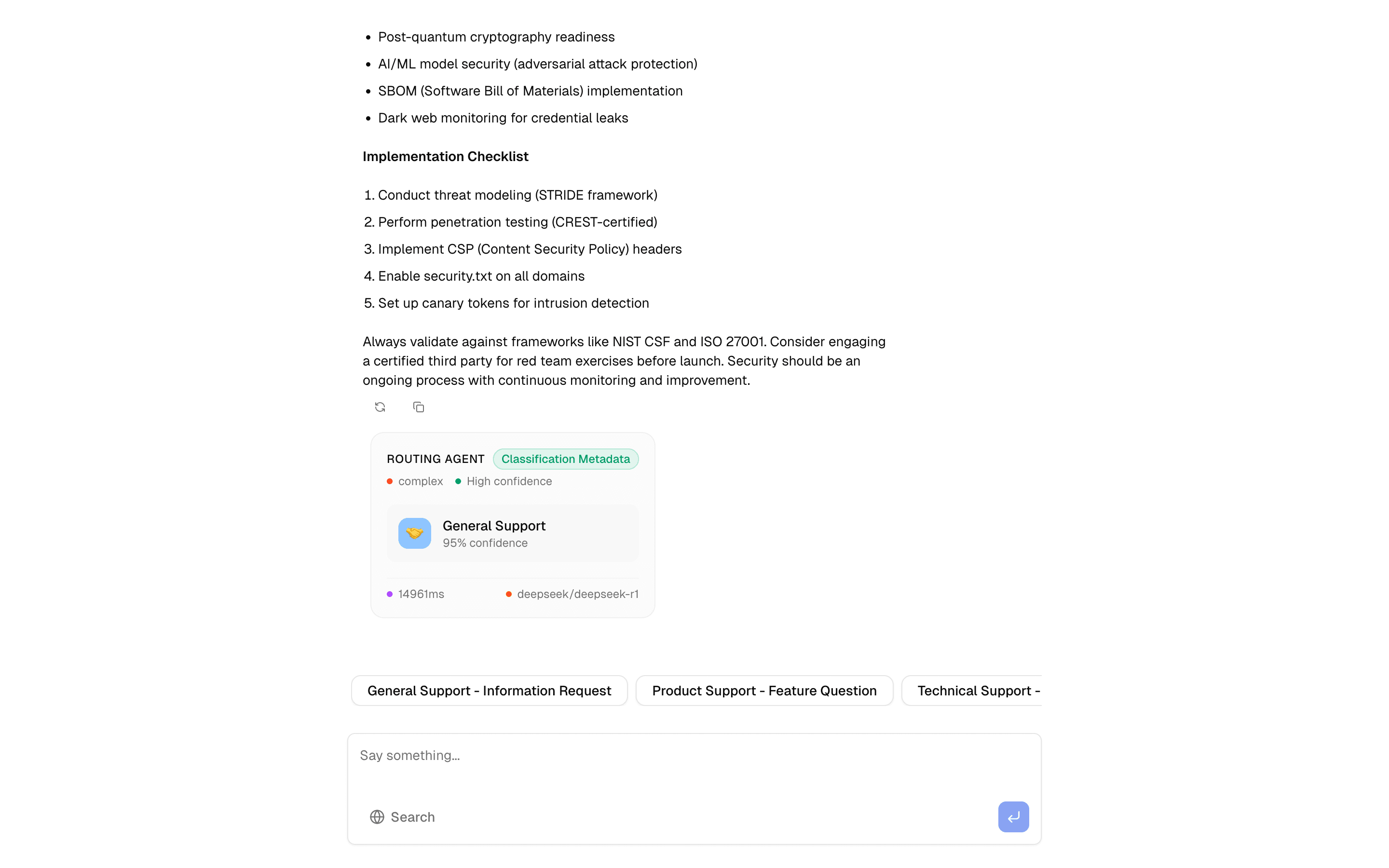
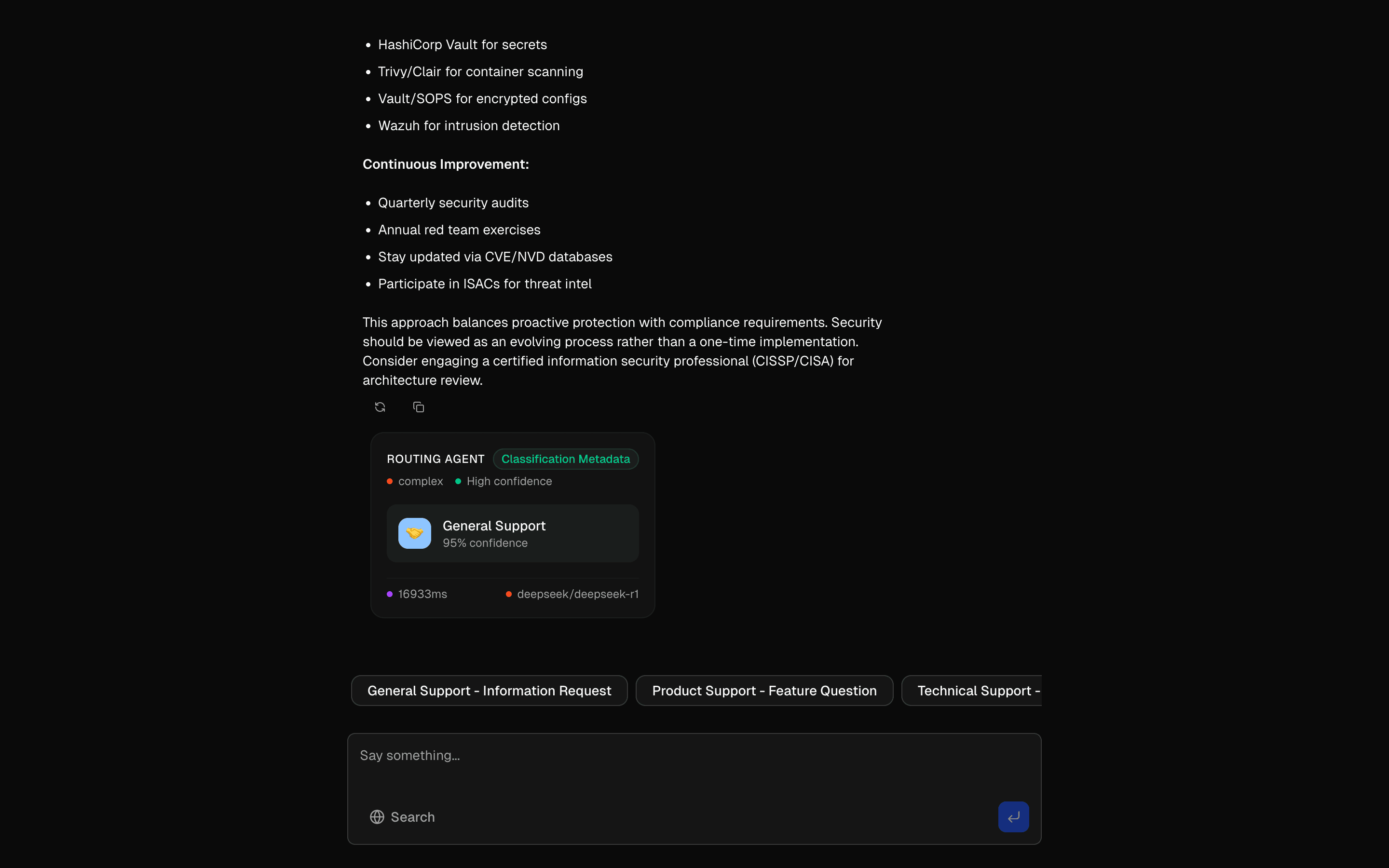
Agent Routing Pattern
Route user queries to specialized AI agents based on context and intent. Includes dynamic agent selection, load balancing, and fallback handling.
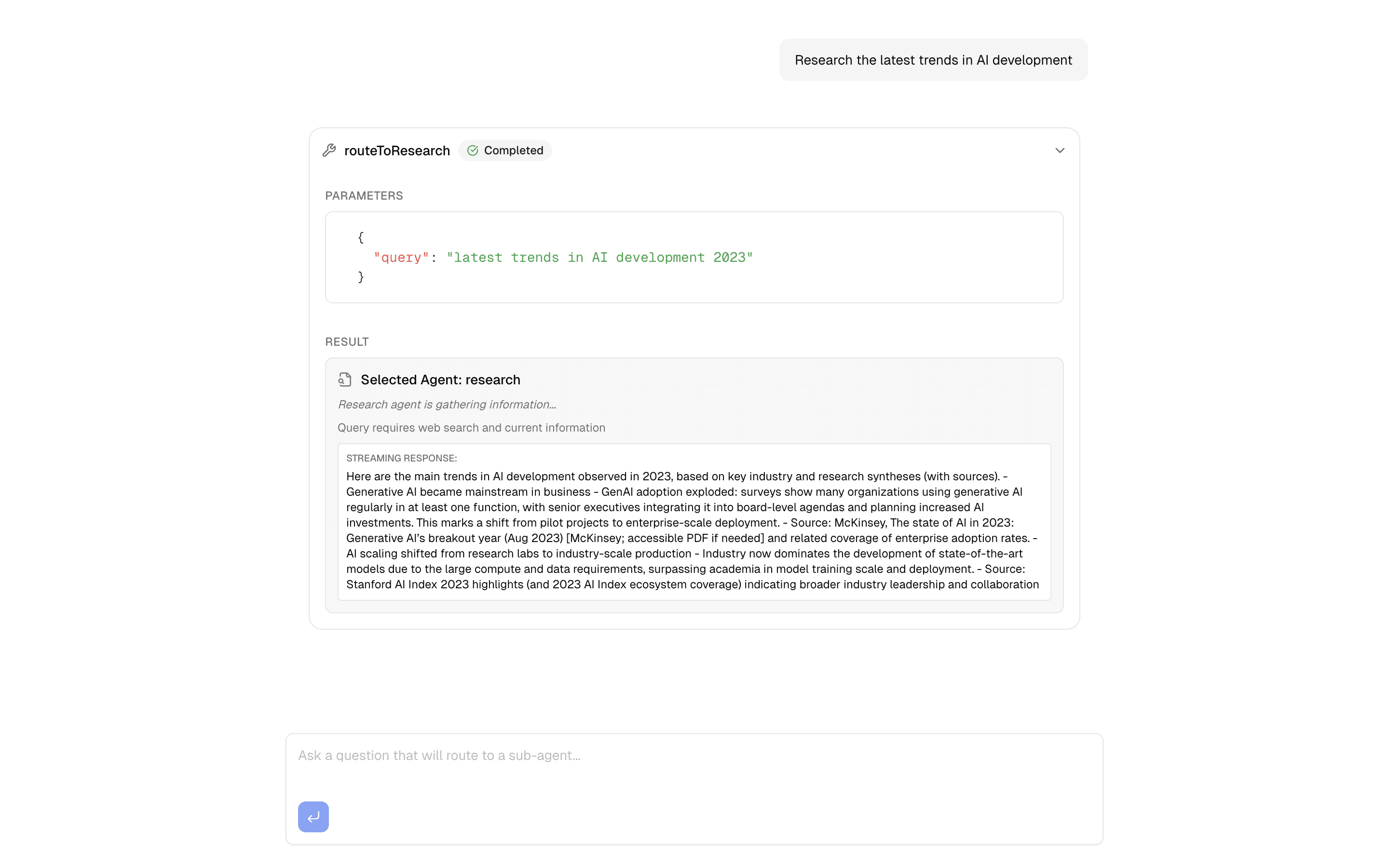
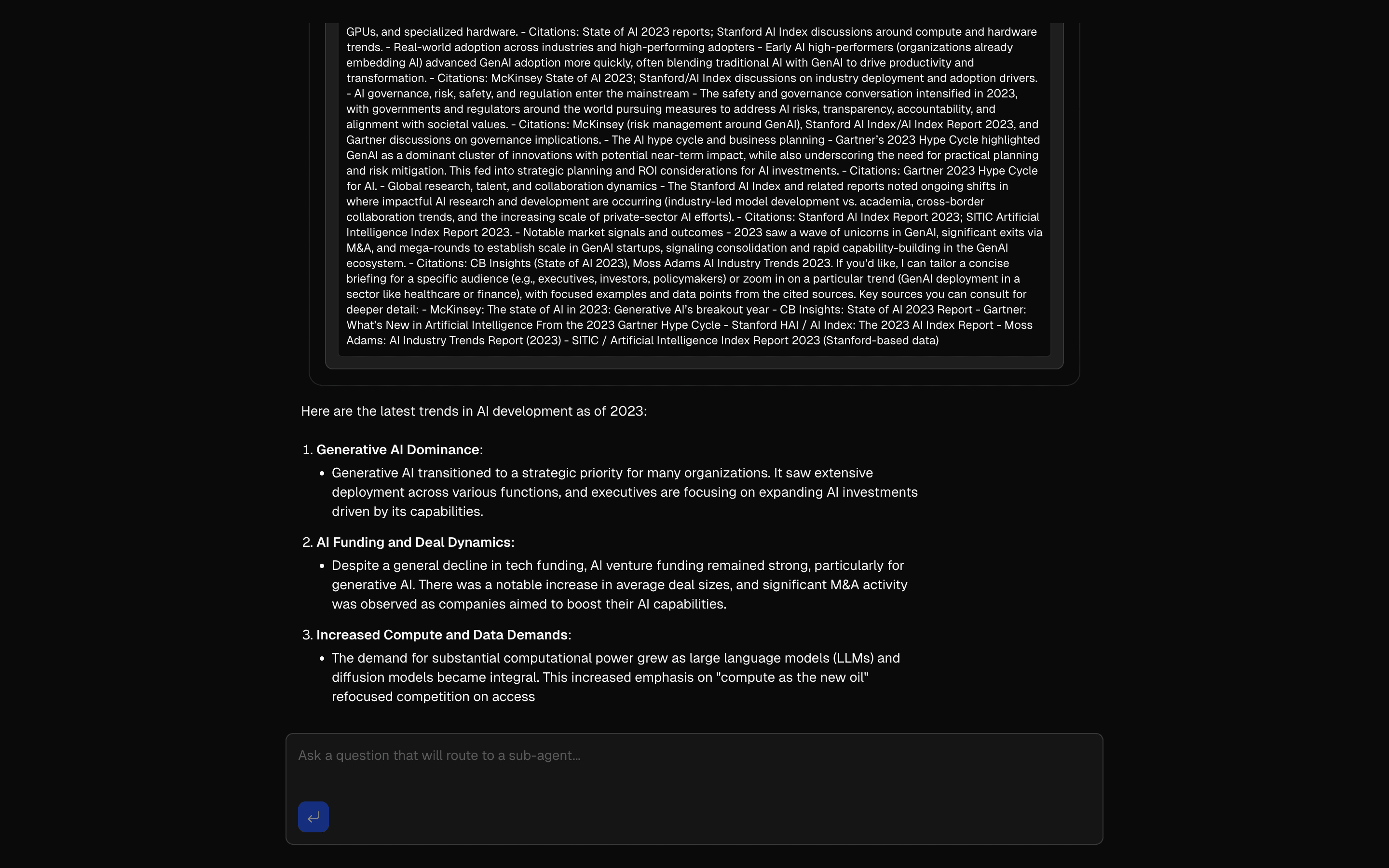
Sub-Agent Orchestrator
Custom Agent implementation demonstrating the Agent interface abstraction with an orchestrator that routes queries to specialized sub-agents (research, analysis, support). Shows options passing and structured outputs.
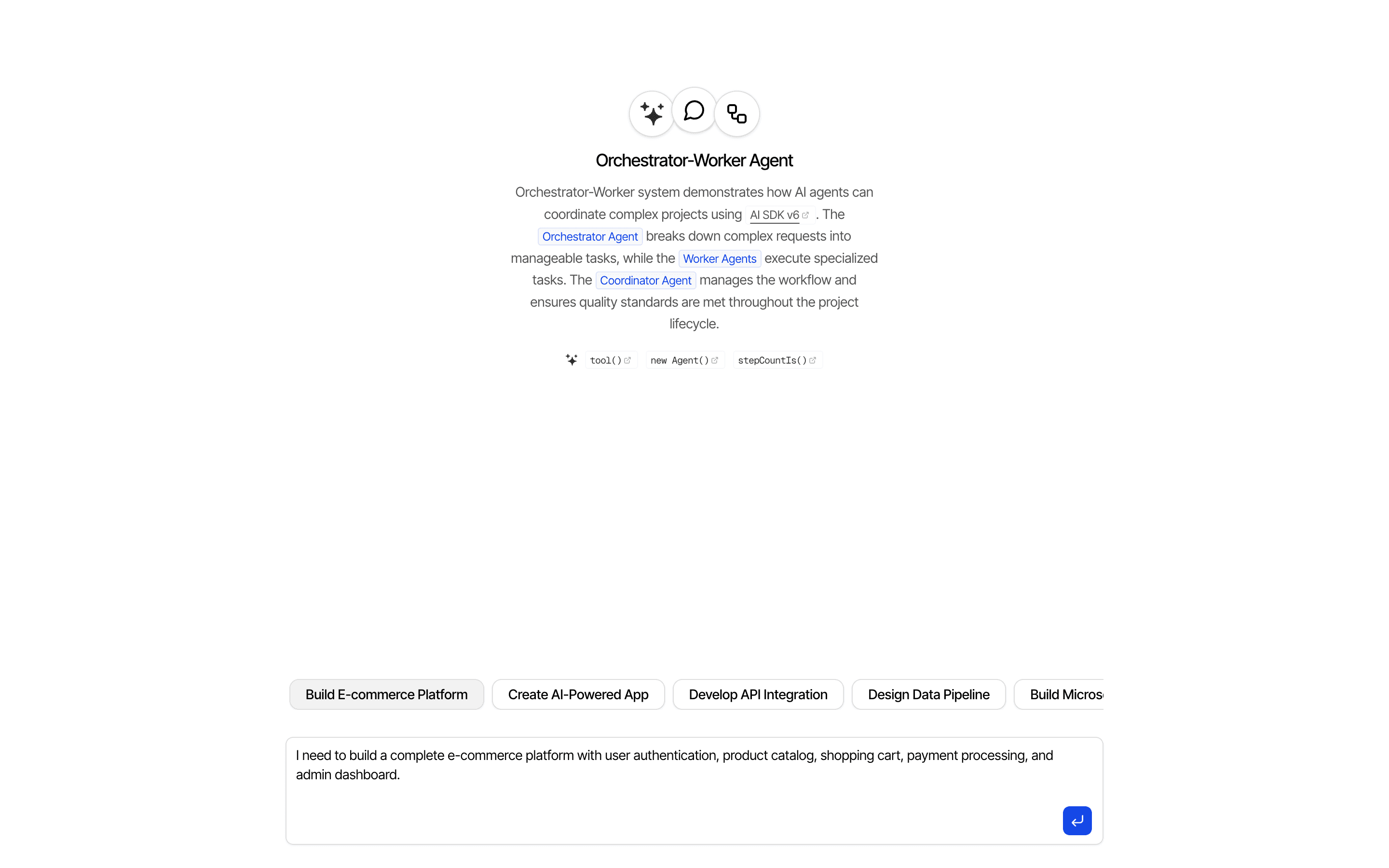
Orchestrator-Worker Pattern
Coordinate multiple worker agents for project management. Handles task distribution, progress tracking, and result synthesis.
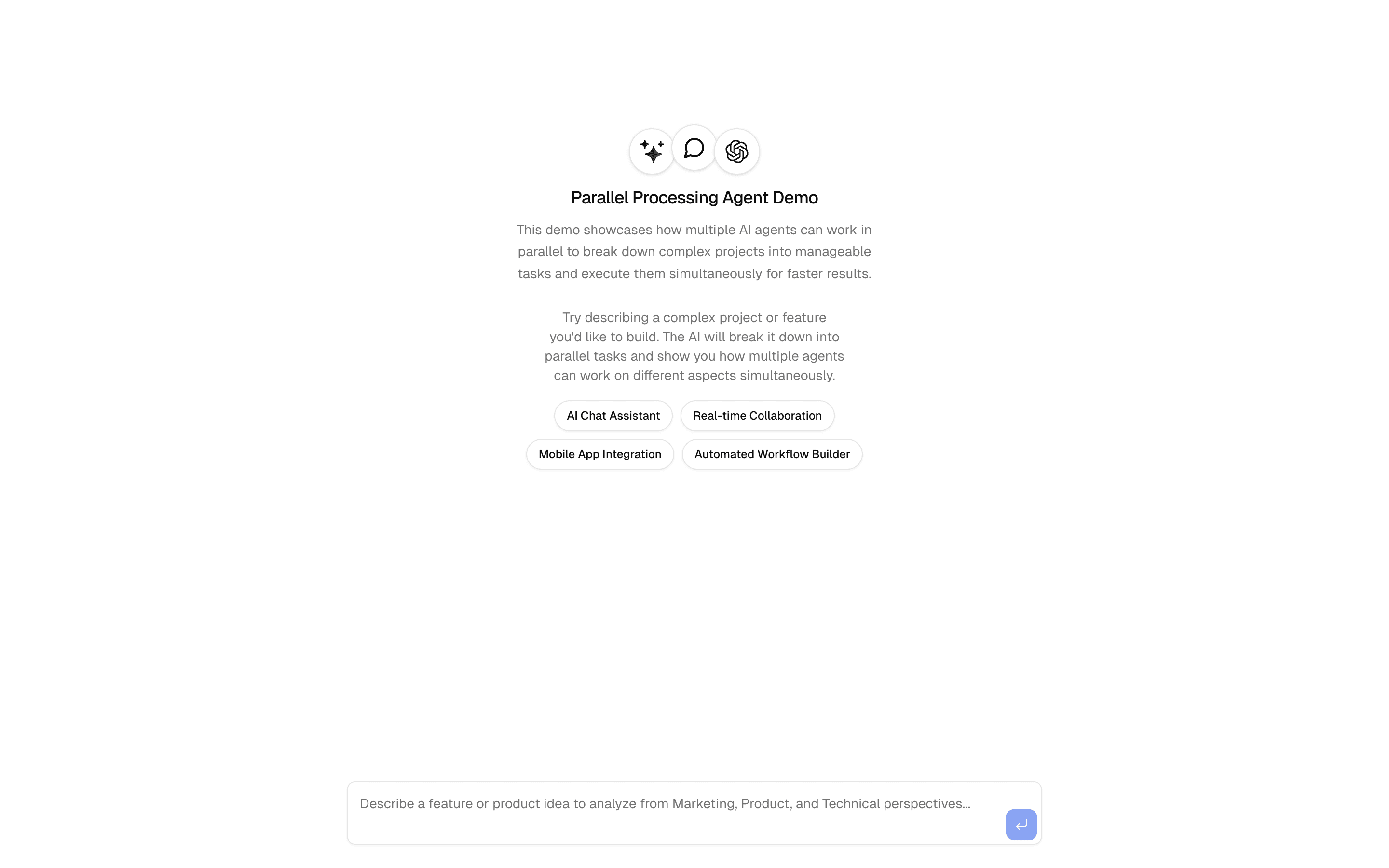
Parallel Processing Pattern
Process content with multiple AI agents running simultaneously. Demonstrates concurrent analysis for faster results.
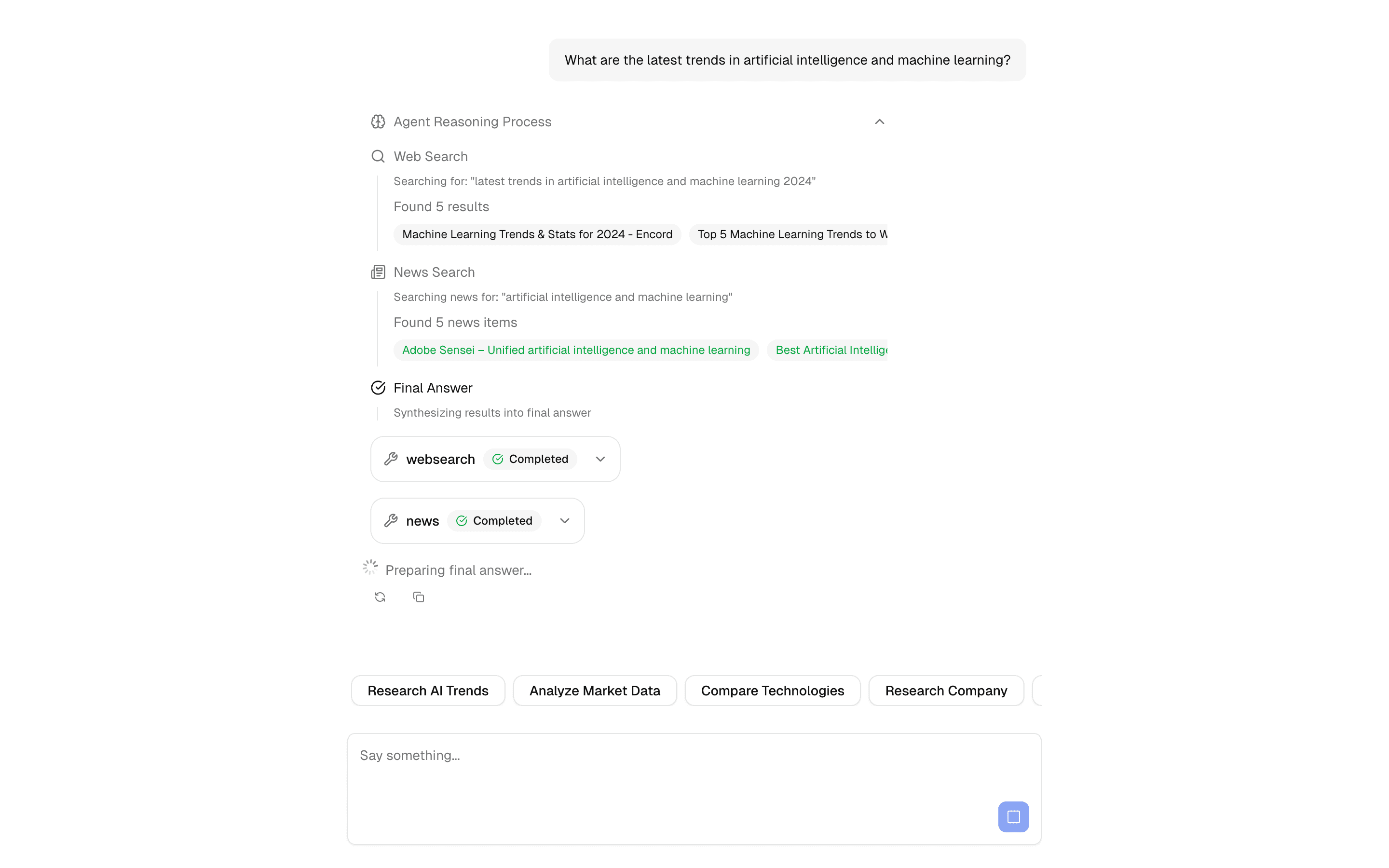
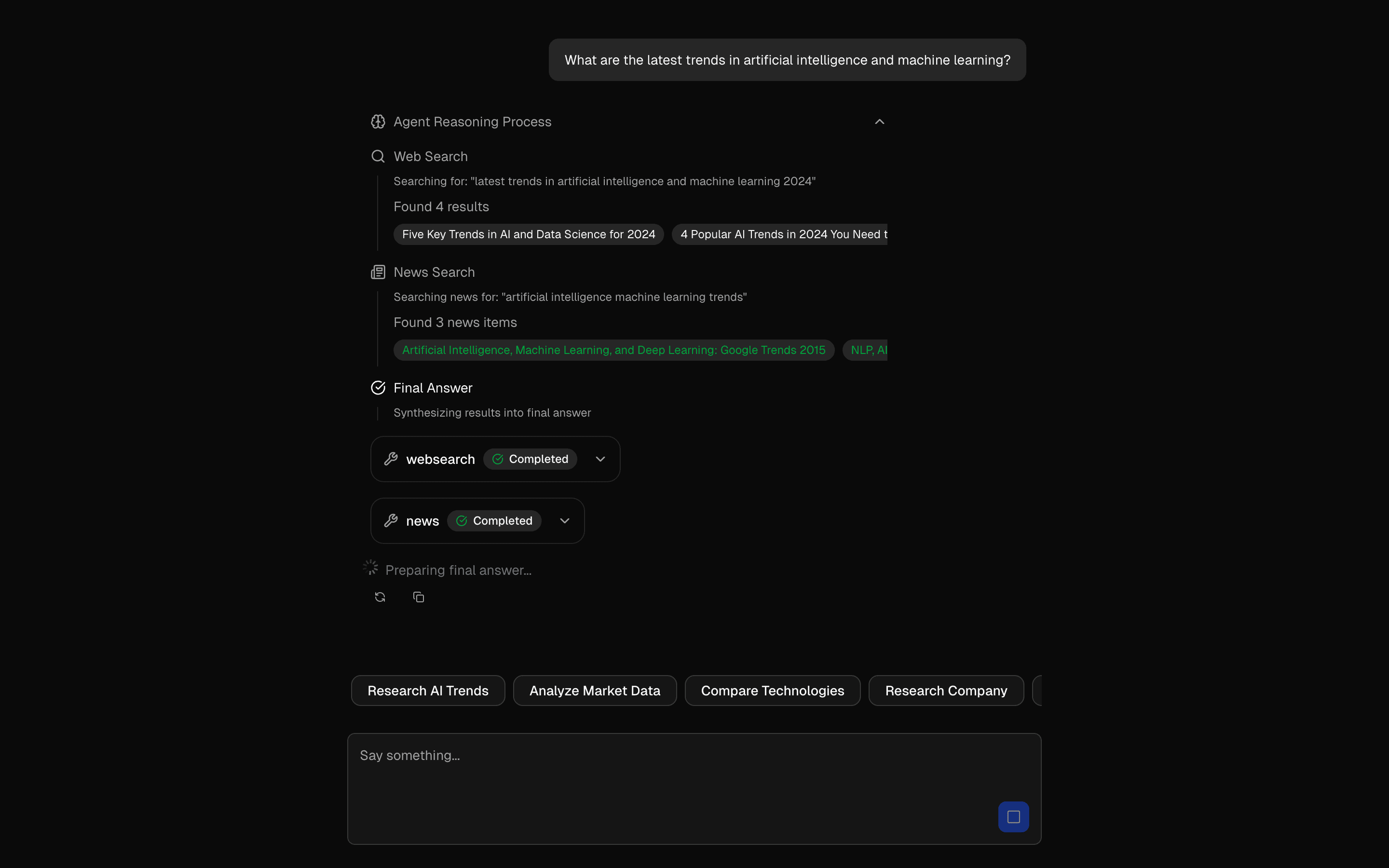
Multi-Step Tool Pattern
Execute multi-step workflows with typed tools. Includes streaming, tool chaining, and decision-making for automated tasks.
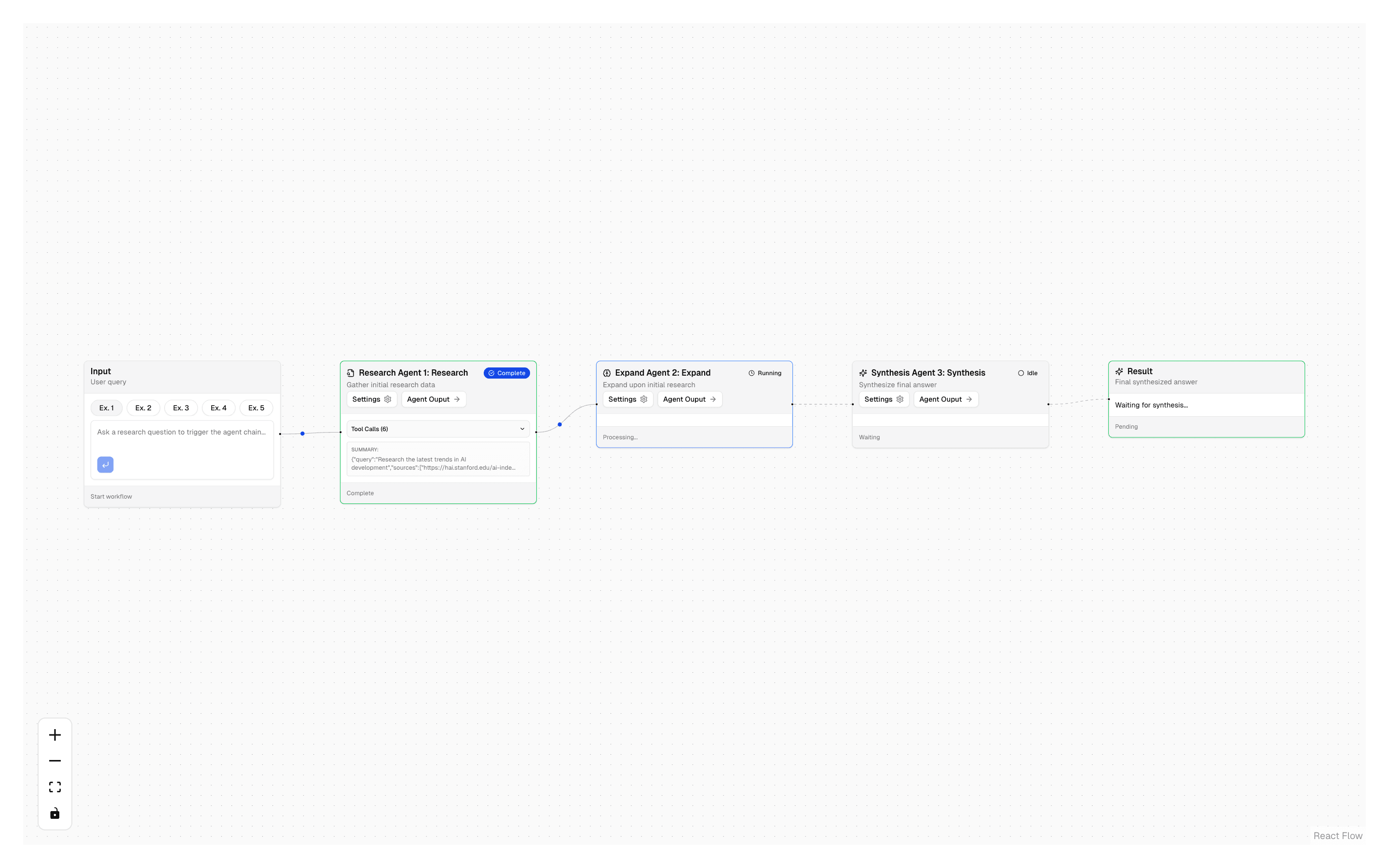
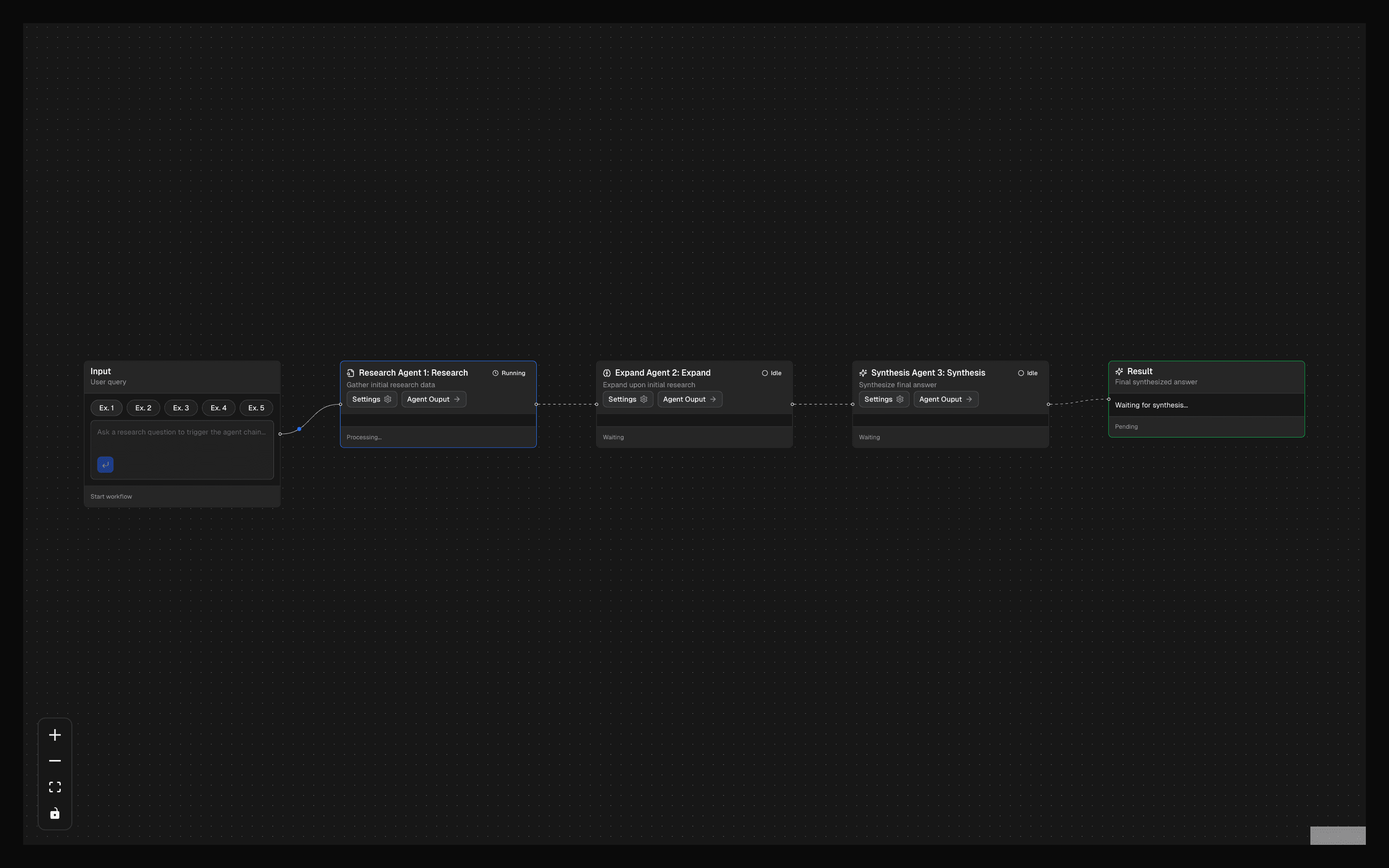
Research Agent Chain
Sequential three-agent chain demonstrating structured outputs flowing between agents. Research Agent 1 gathers research, Expand Agent 2 expands research, Synthesis Agent 3 synthesizes final answer. Uses Exa tools and AI SDK 6's stabilized structured output support.
Related topics
Continue with adjacent topics that share the same building blocks.
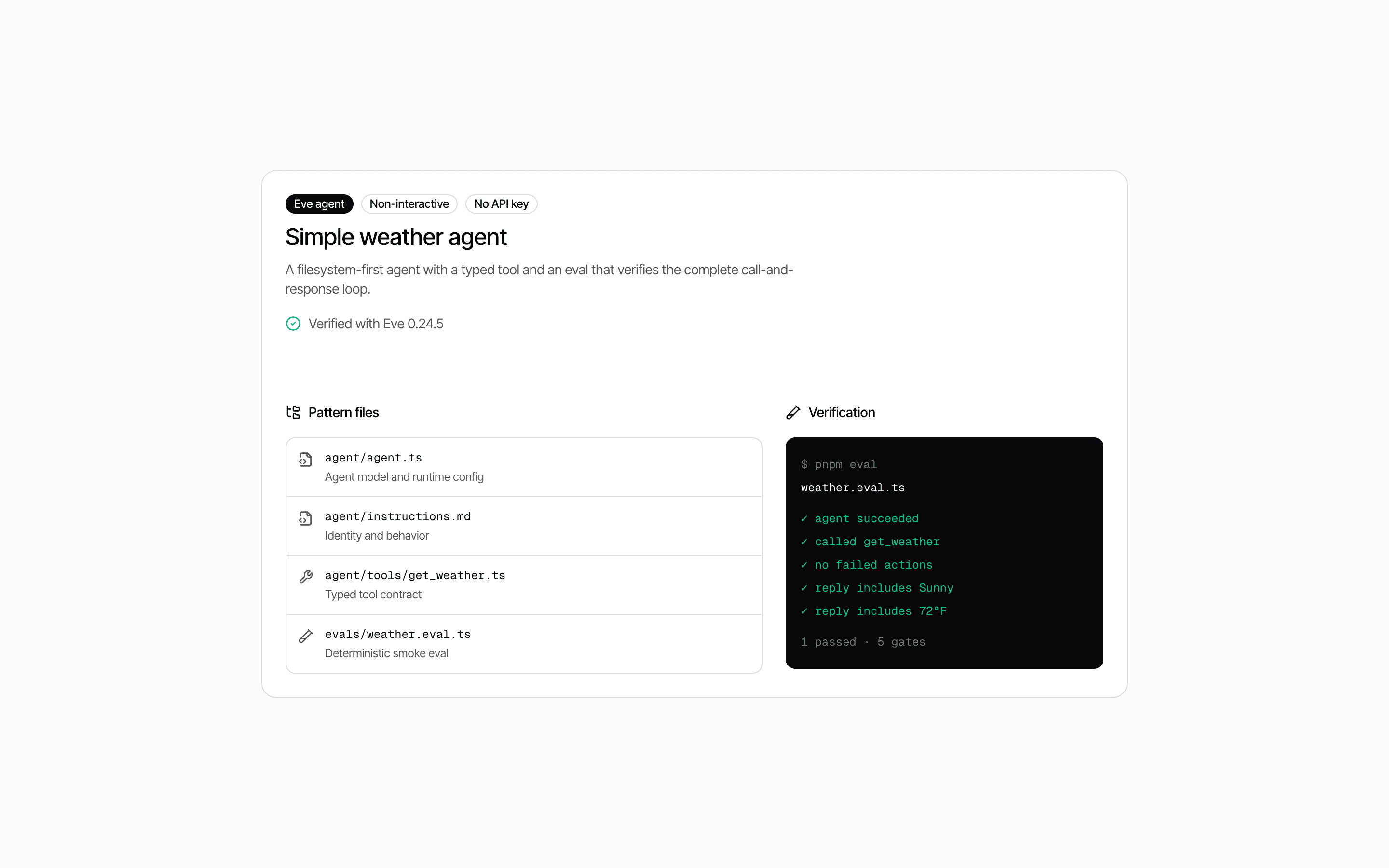
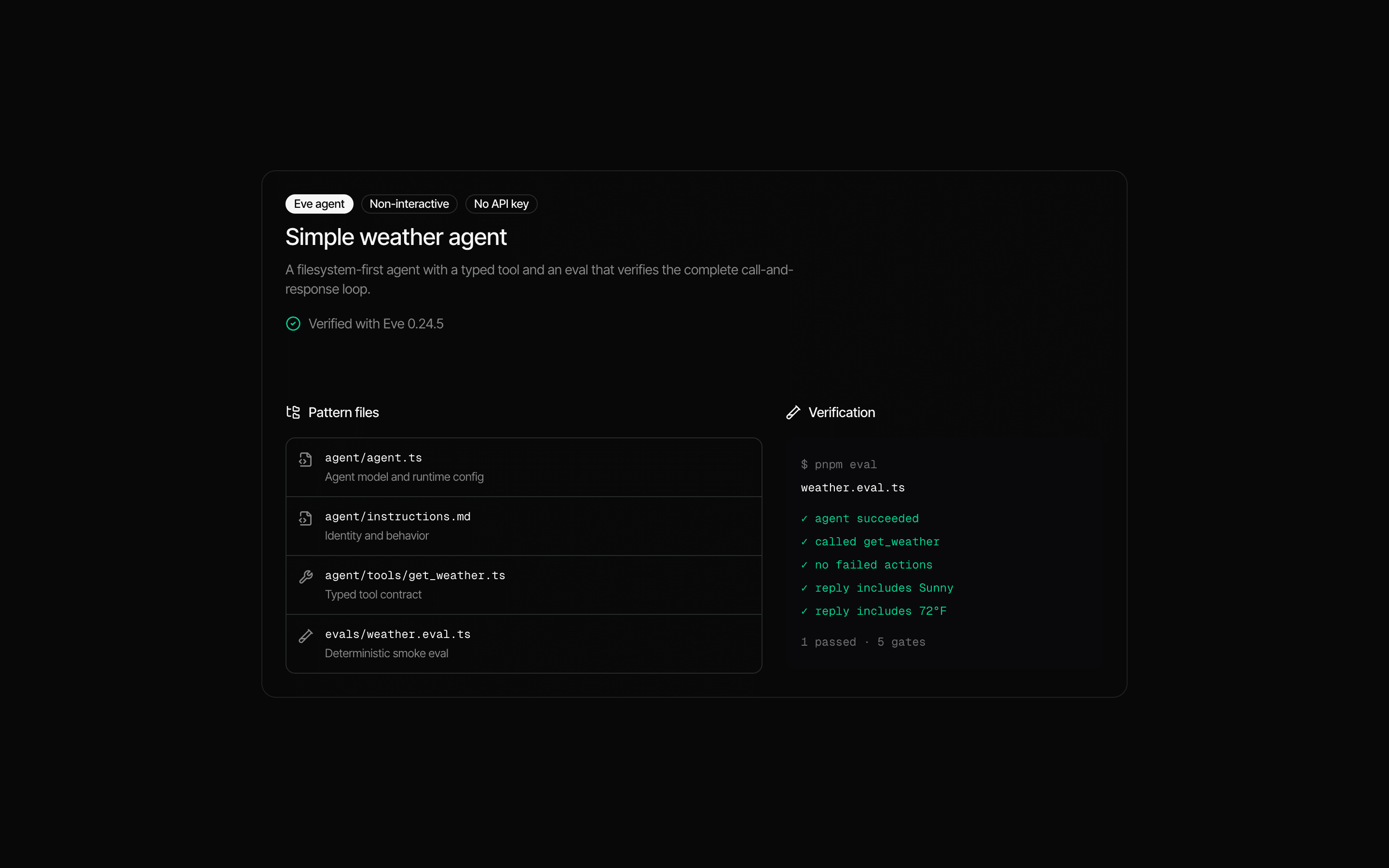
Durable AI Agents
11Agents that survive restarts: durable execution with the Workflow DevKit, plus Eve agents with long-term memory, cron schedules, and approval gates that park and resume. TypeScript, full source.
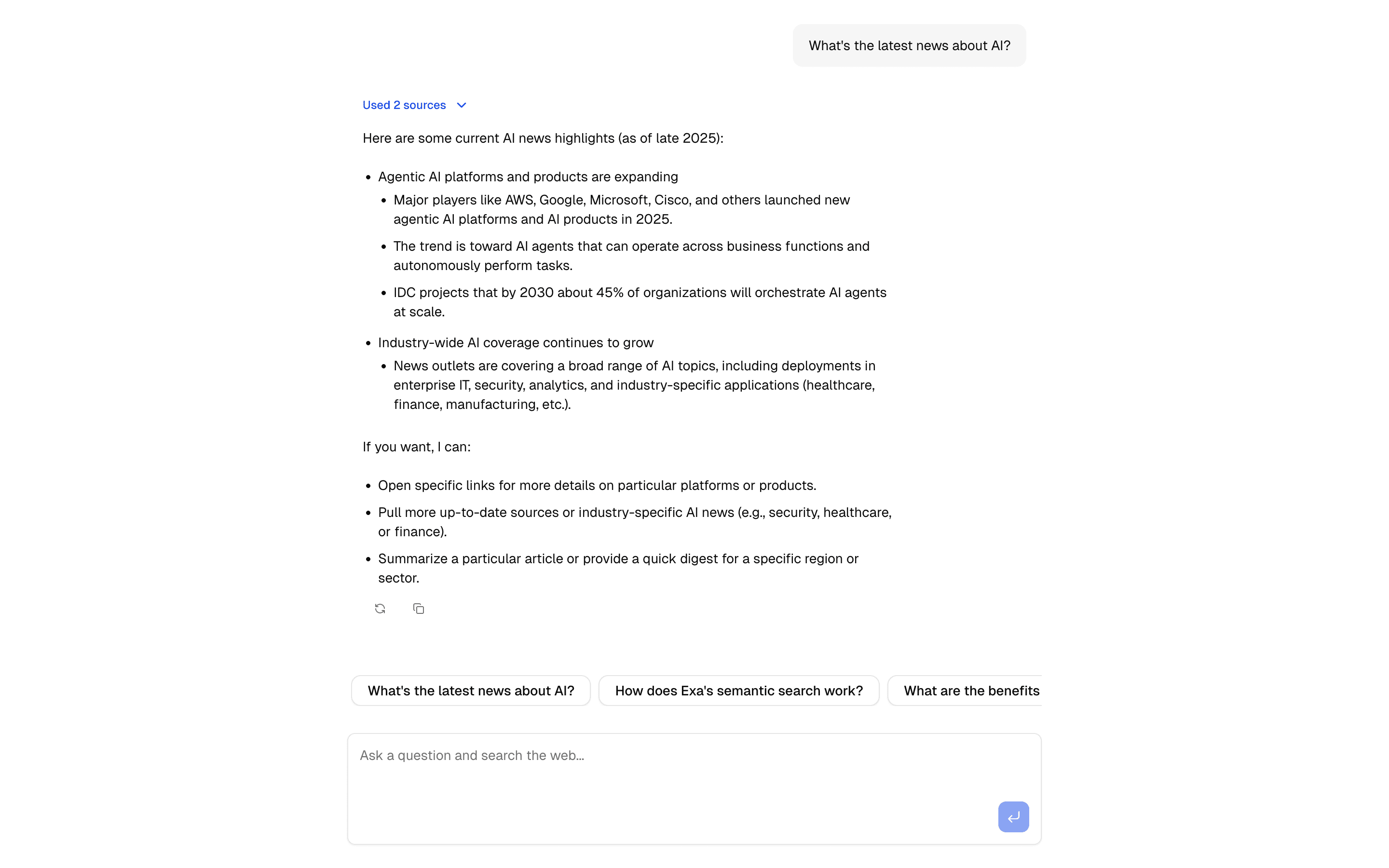
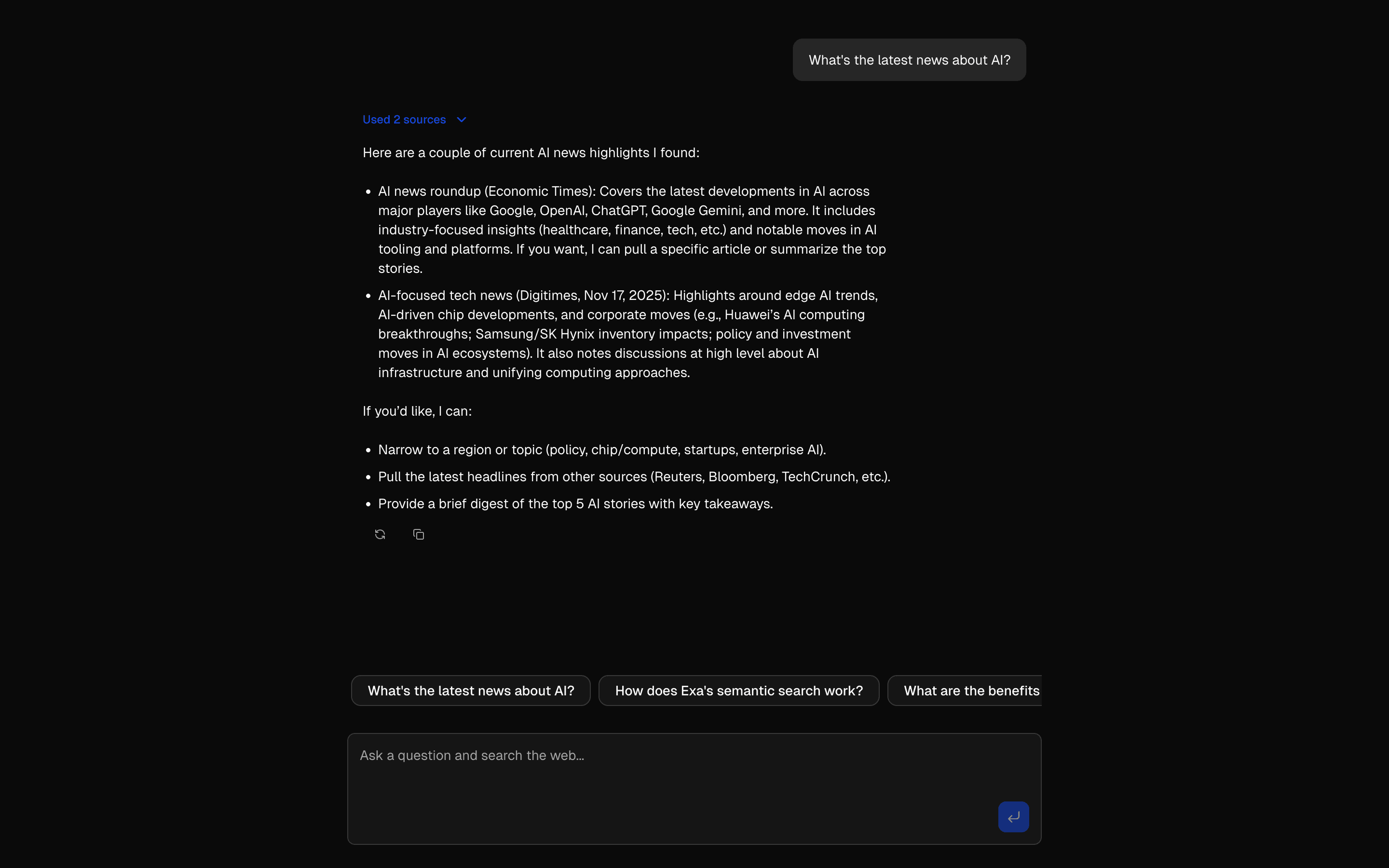
AI Agent Tools
22Give agents real capabilities: tool() definitions with lifecycle hooks, dynamic tools, tool-call repair, web search (Exa, Firecrawl), scraping, PDF ingestion, and human approval gates.
AI SDK Examples
69Complete, running examples for the AI SDK: generateText, streamText, structured output, tool calling, agent loop control, prepareStep, and tool-call repair. Copy the source, keep shipping.
Browse by category
Jump into the catalog filtered by category.
You’ve reached the end of AI Agent Orchestration.