Loading pattern preview
BlocksAgent Patterns
Agent Routing Pattern
Agent Routing Pattern
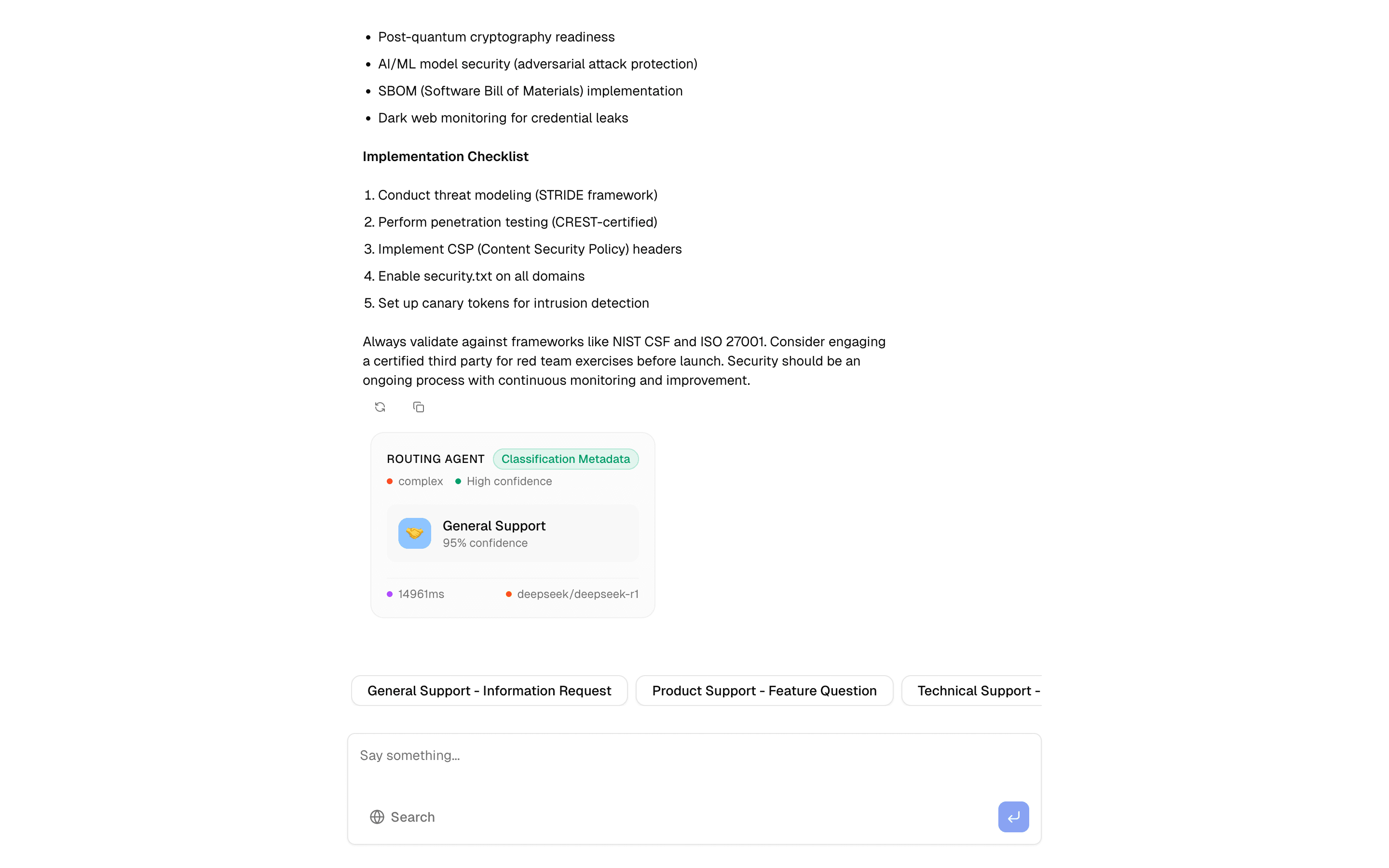
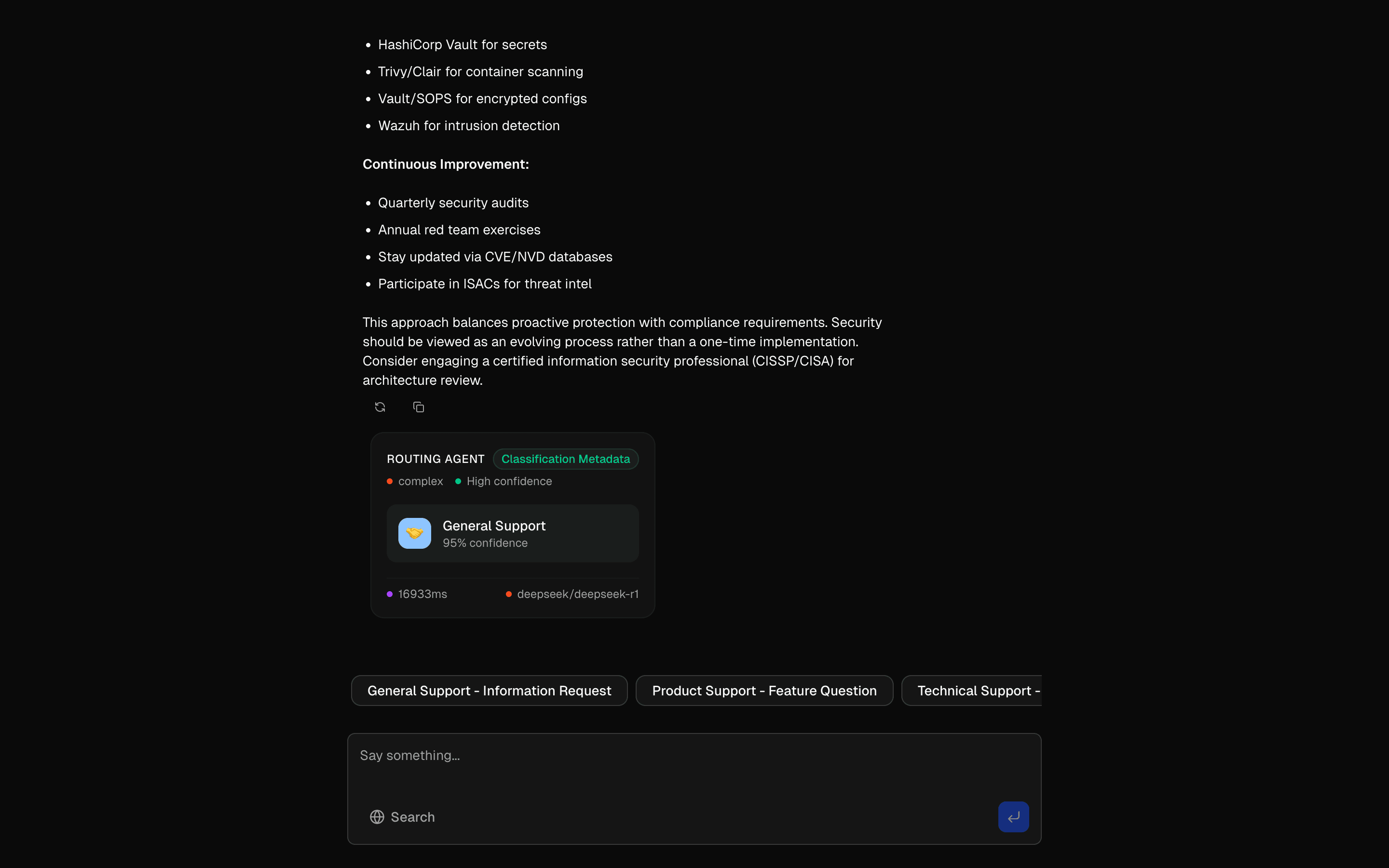
Route user queries to specialized AI agents based on context and intent. Includes dynamic agent selection, load balancing, and fallback handling.
Use this when one chat endpoint should sort queries into specialist agents and fall back across OpenAI, Perplexity, and Deepseek if a provider fails.
Loading pattern preview
Problems solved
Technical challenges this implementation handles out of the box.
- Classify support queries into specialized agent categories
- Route each query to a tailored agent system prompt
- Select models by query complexity before streaming a reply
- Stream classification metadata to the client as custom data parts
- Fall back across OpenAI, Perplexity, and Deepseek providers
Use cases
Products and workflows this pattern is designed to support.
- Customer support desks that route by intent
- Multi-department help centers
- Sales and billing inquiry triage
- Technical support chat with specialist agents
- Intent-based agent orchestration demos
Compare with
Similar patterns, and when each one is the better fit.
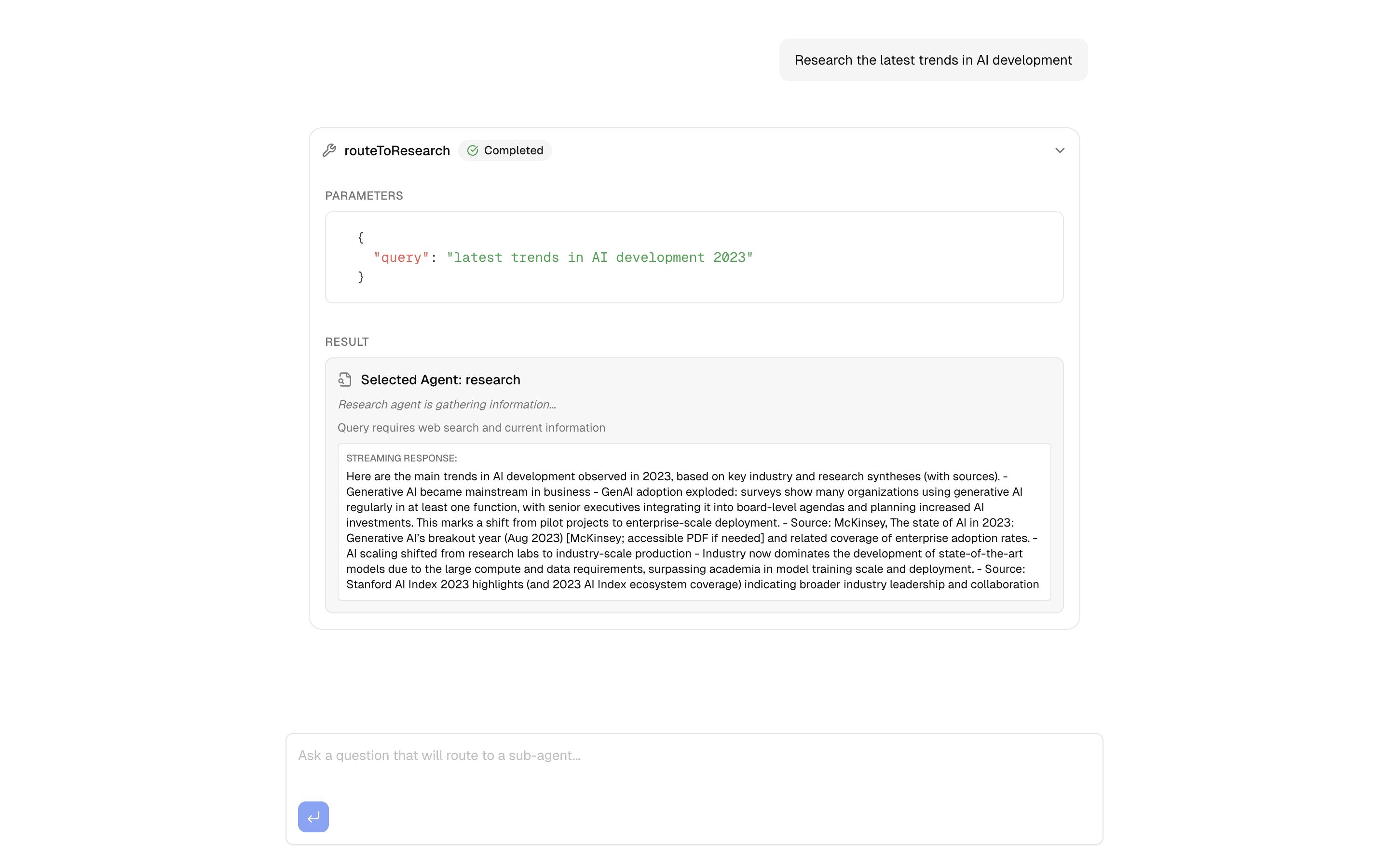
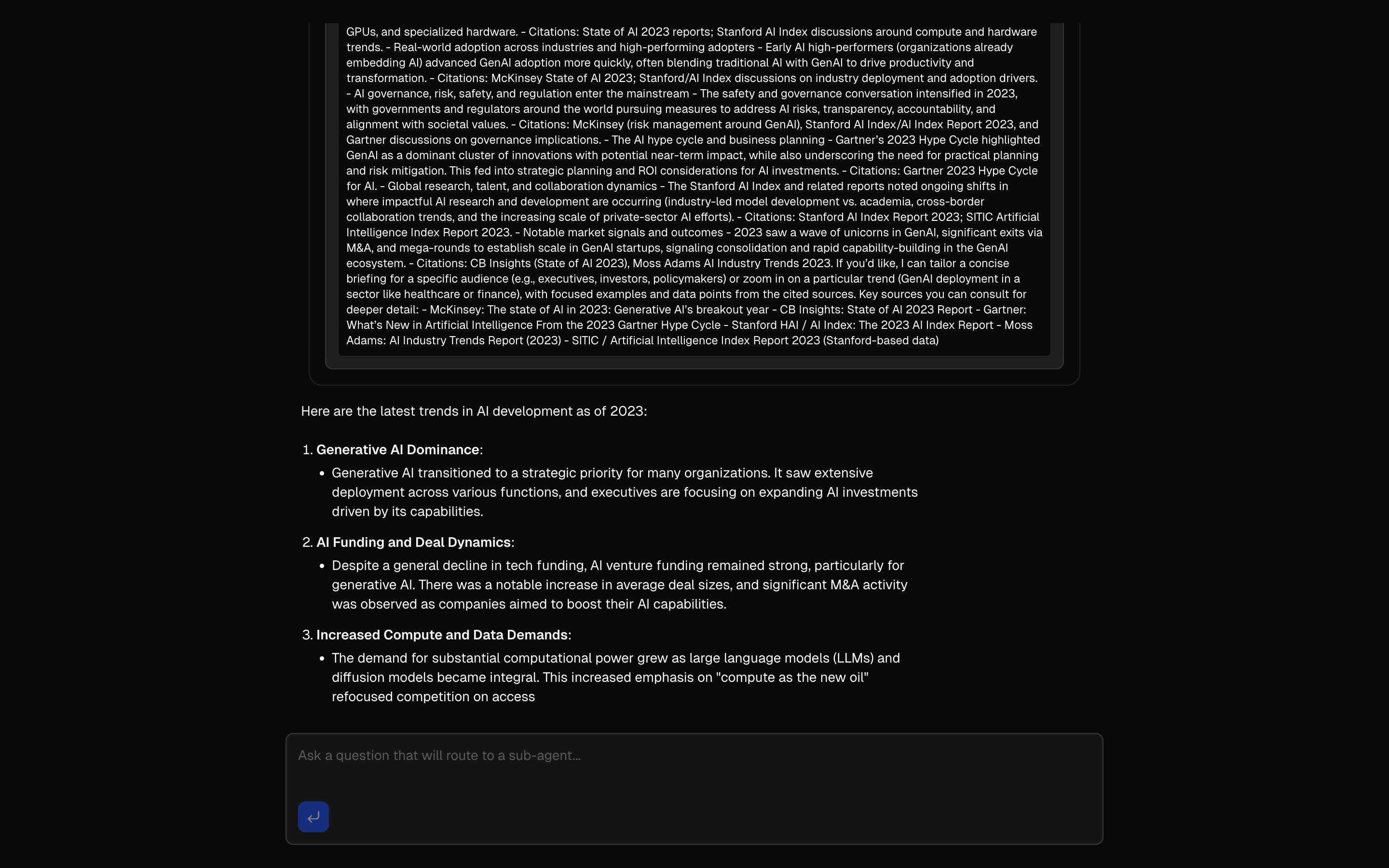 Sub-Agent OrchestratorCustom Agent implementation demonstrating the Agent interface abstraction with an orchestrator that routes queries to specialized sub-agents (research, analysi…
 Parallel Processing PatternProcess content with multiple AI agents running simultaneously. Demonstrates concurrent analysis for faster results.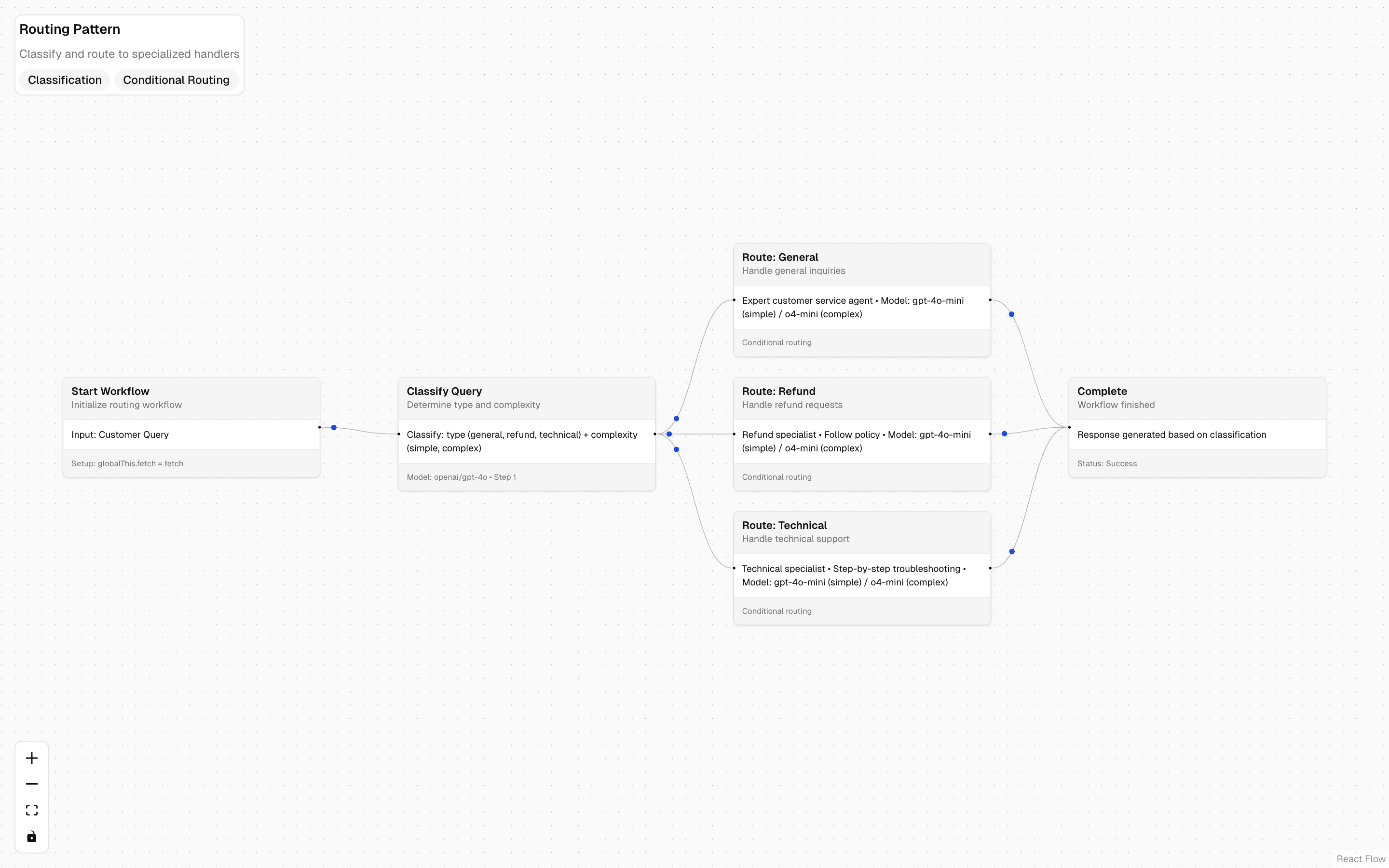
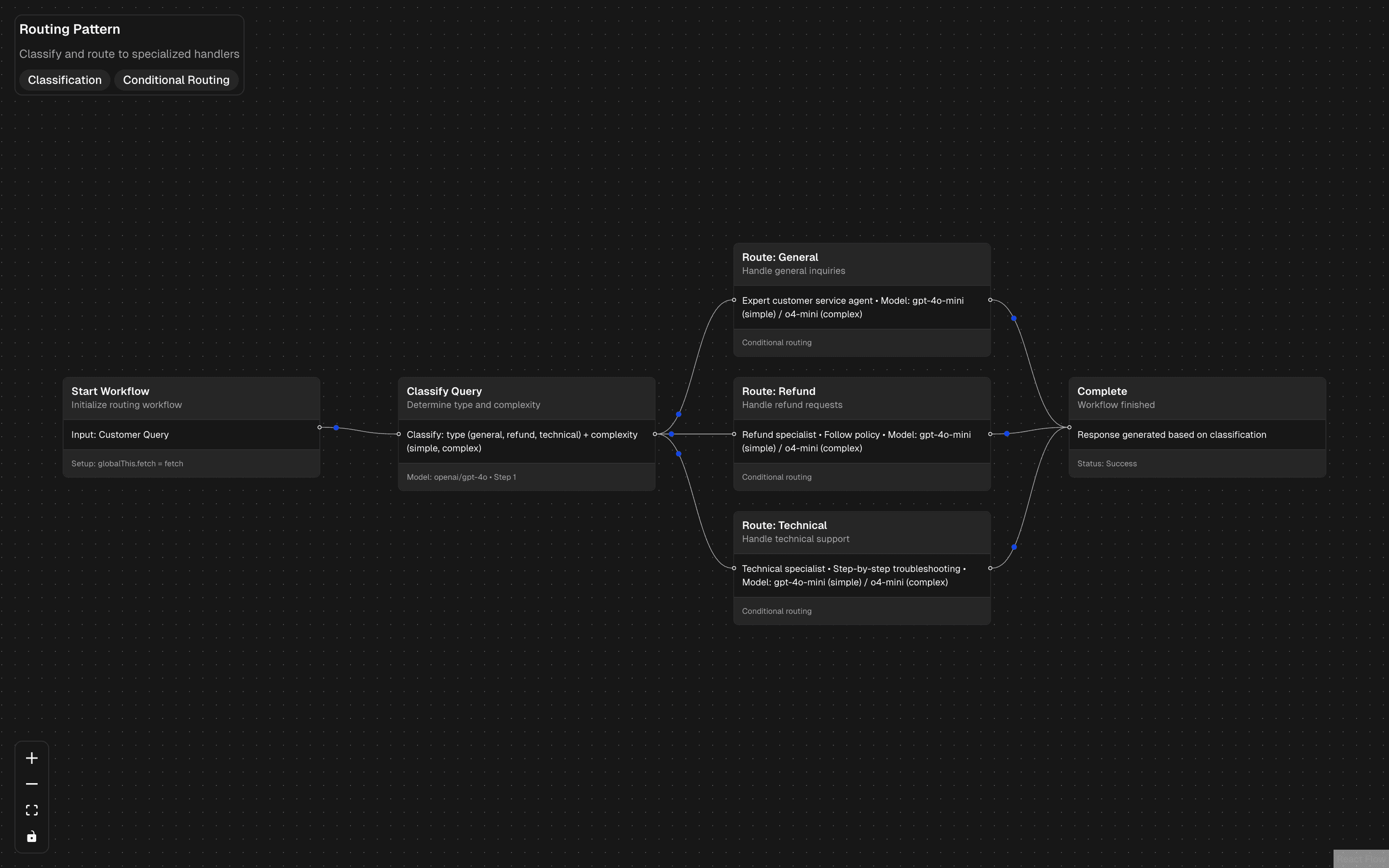 Routing Workflow PatternFreeUse this when a durable workflow should pick a different handler or model per request based on how an AI classifies it, such as support tickets.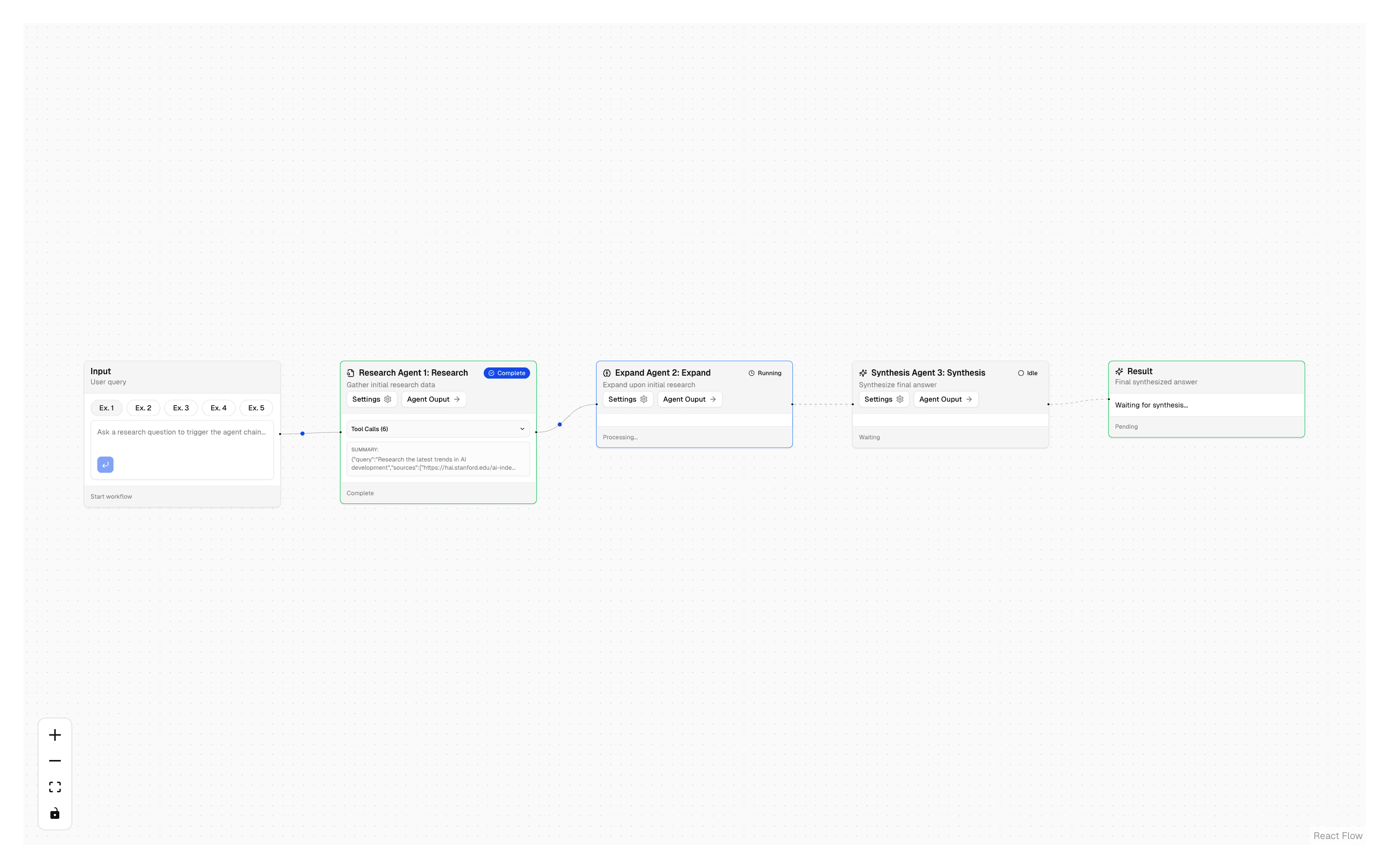
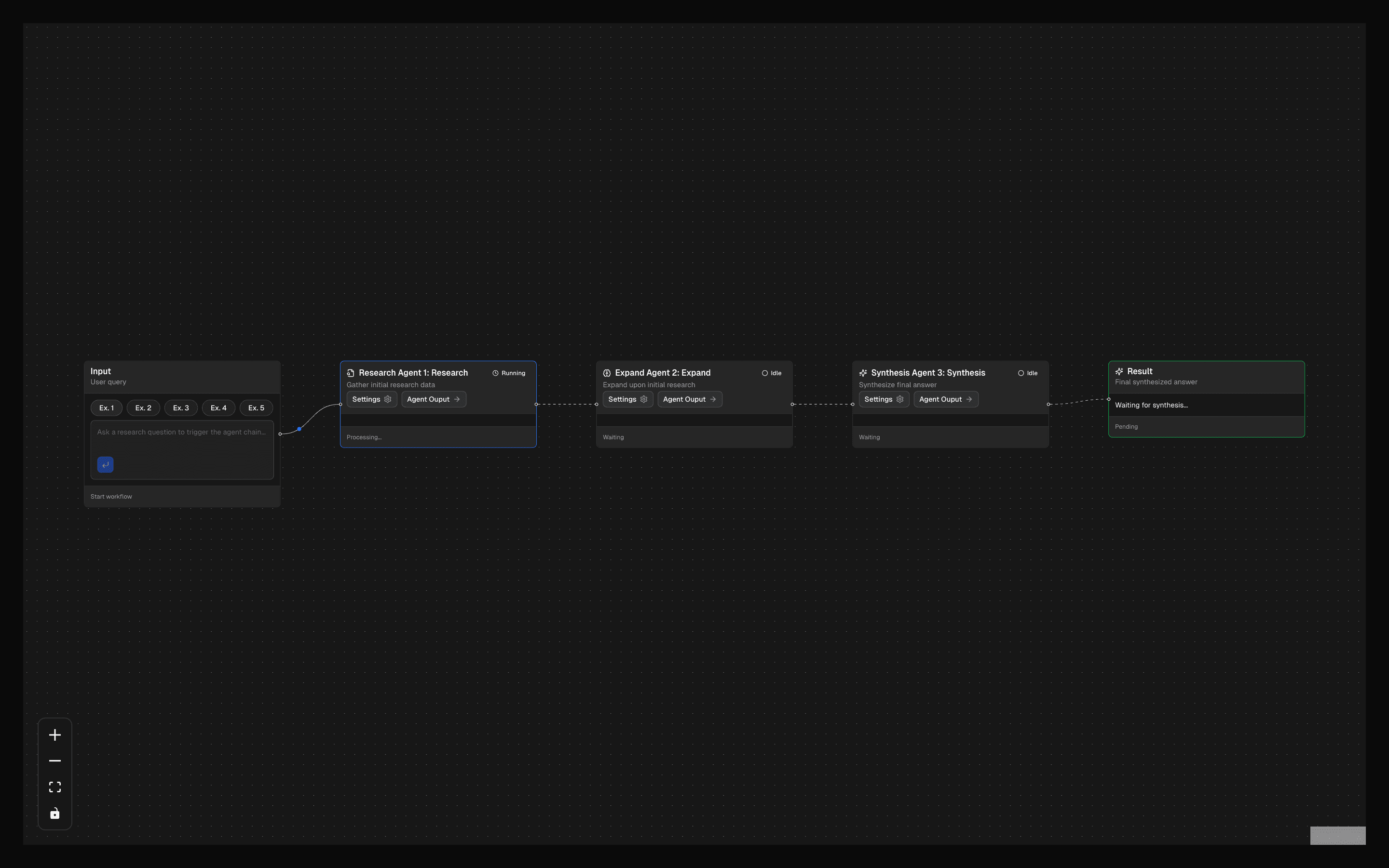 Research Agent ChainUse this when one agent doing all the research is too broad and you want separate gather, expand, and synthesize agents run in order with Exa search.
Setup
Requirements, wiring steps, and what this pattern adds to your project.
Getting started
Pick how you want to pull this pattern in. Then wire env vars and routes the same way.
- 1
Download → Next.js app
Use Download → Next.js app in the preview toolbar. You get a zip scaffold (Pro downloads rewrite preview `/view/.../api/*` paths to `/api/*` automatically).
- 2
Extract the zip and install dependencies
Unzip the archive, then run `pnpm install` (or npm / yarn) in the project folder.
- 3
Fill .env.local
The download includes .env.local placeholders when needed. Add real values for: OPENAI_API_KEY, PERPLEXITY_API_KEY, DEEPSEEK_API_KEY.
- 4
Customize the agent and tool files
Adapt prompts, tools, and stop conditions in the generated project for your product.
- 5
Run the app and open the pattern route
Run `pnpm dev`, open the setup/checklist page if present, then navigate to the generated pattern route and verify responses.
Environment variables
Capabilities
AI SDK APIs
generateObjectstreamTextconvertToModelMessagesAgenttoolstepCountIsProviders
OpenAIPerplexitydeepseek
Files added
4 files
app/ai-agents-routing/page.tsxapp/ai-agents-routing/layout.tsxapp/api/routing-agent/route.tslib/ai-routing-types.ts
Dependencies
9 total
npm packages
6AISDKlucide-reactNext.jsReactsonnerZod
 Registry components
badgeemptyscroll-area
Critical files
2 files
routing-agent/route.tsCore routing agent API route. Implements a 3-stage AI pipeline: (1) classifies user input via generateObject into support categories, (2) routes to specialized agent config with tailored system prompts, (3) selects model based on complexity. Uses createUIMessageStream with custom data parts for streaming classification metadata and agent info to the client.
lib/ai-routing-types.tsDefines the routing agent's type system: RoutingDataParts, RoutingMetadata, RoutingUIMessage, and agentConfigs map that maps 7 classification categories to agent configurations (task, icon, color, systemPrompt). Contains getAgentConfig() which resolves classification type to agent config.
Requirements
- Complexity
- Intermediate
- Setup time
- ~15 minutes
- Node
- 24+
- Memory
- 512MB