Loading pattern preview
BlocksAgent Patterns
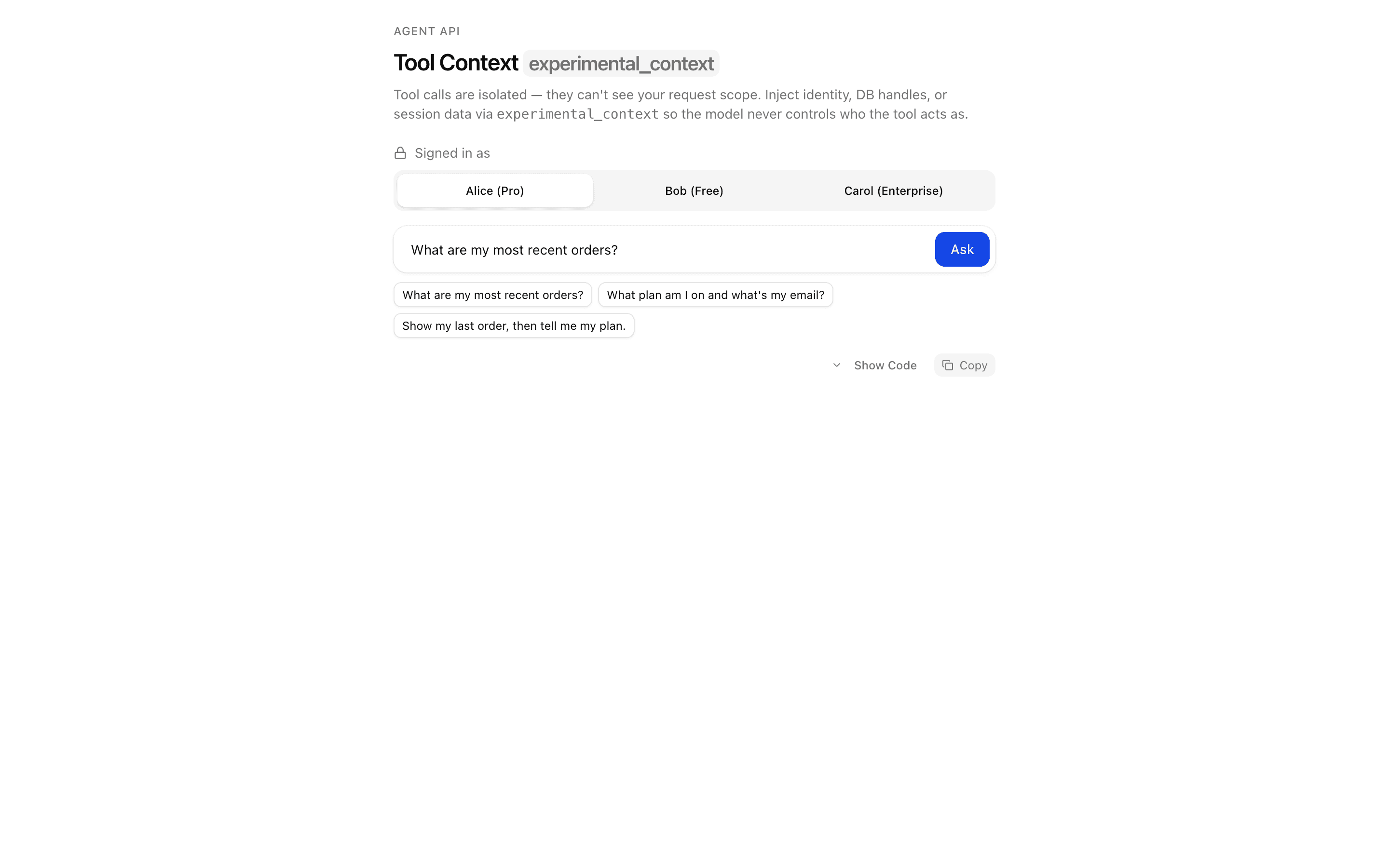
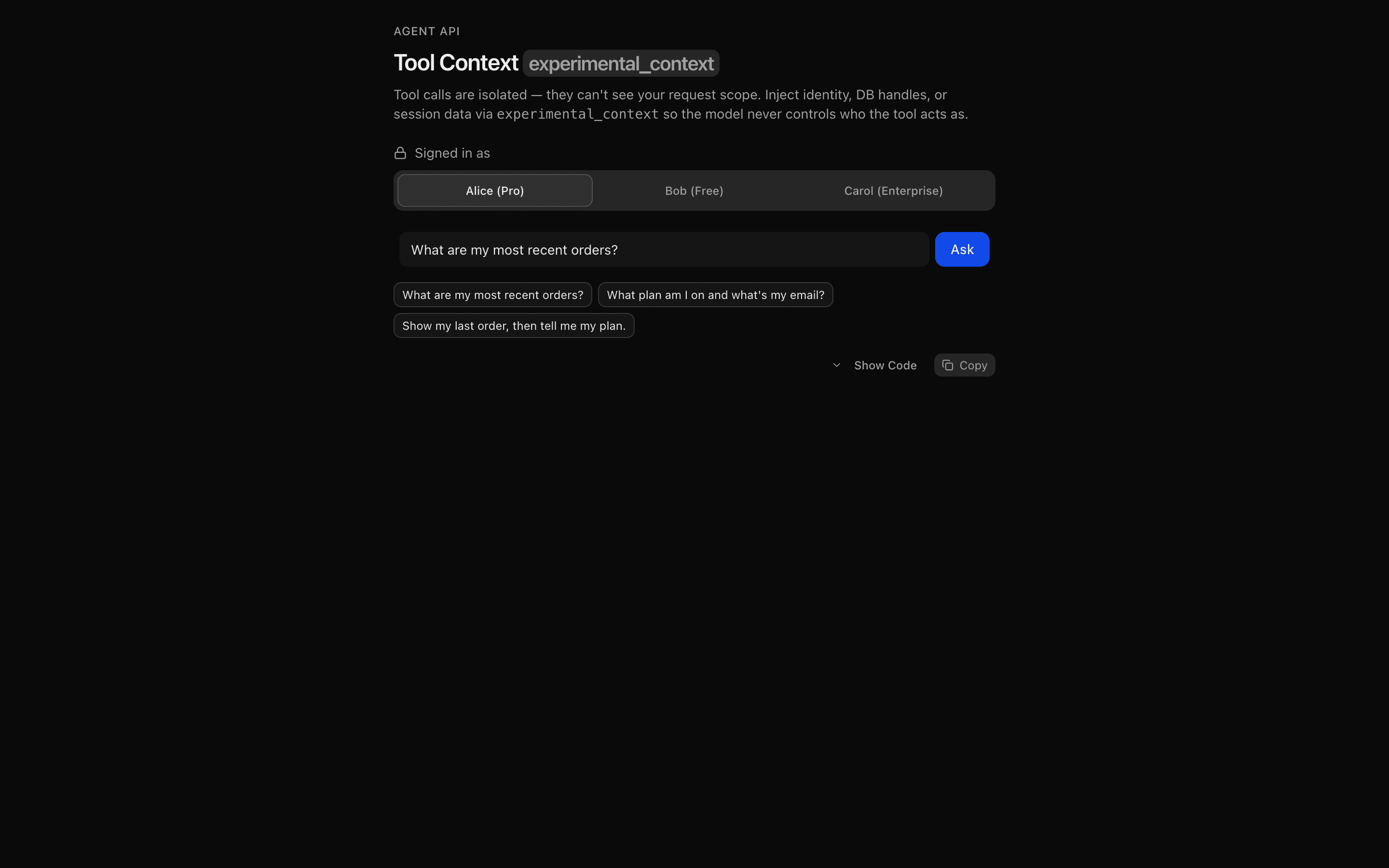
Tool Context: experimental_context
Tool Context: experimental_context
Inject request-scoped context (user identity, database handles, session) into ToolLoopAgent tools via experimental_context, so the model never supplies sensitive identity in tool inputs.
Use this when a multi-tenant agent must scope every tool call to the authenticated request so a prompt injection cannot reach another user's data.
Loading pattern preview
Problems solved
Technical challenges this implementation handles out of the box.
- Keep user identity out of model-controlled tool inputs
- Share database or service handles across tools via experimental_context
- Scope tool execution to the authenticated request
- Reduce prompt-injection risk around cross-user data access
Use cases
Products and workflows this pattern is designed to support.
- Per-user account assistants
- Multi-tenant agent tools
- Injecting DB or session into isolated tool calls
- Identity-scoped agent backends
Compare with
Similar patterns, and when each one is the better fit.
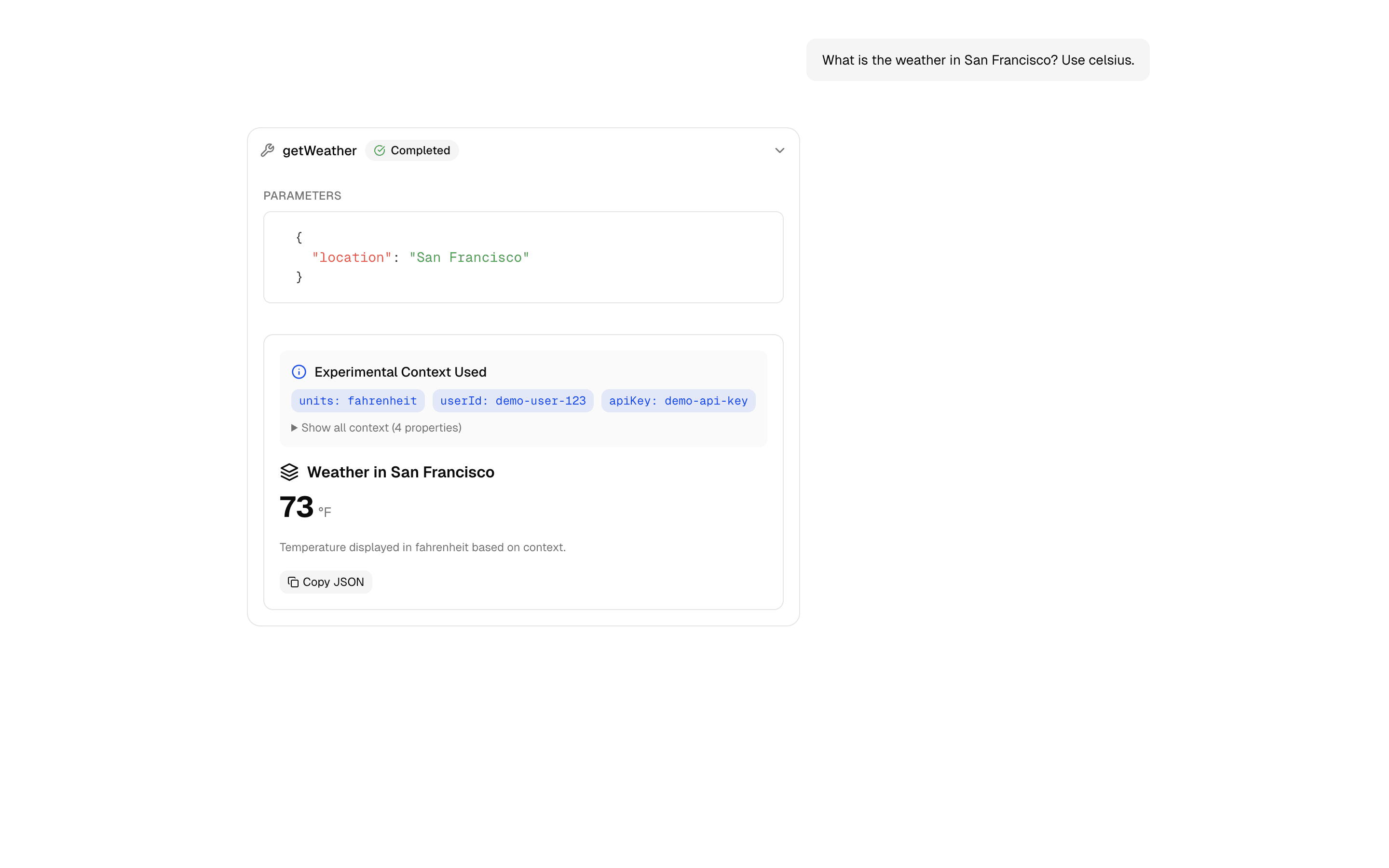
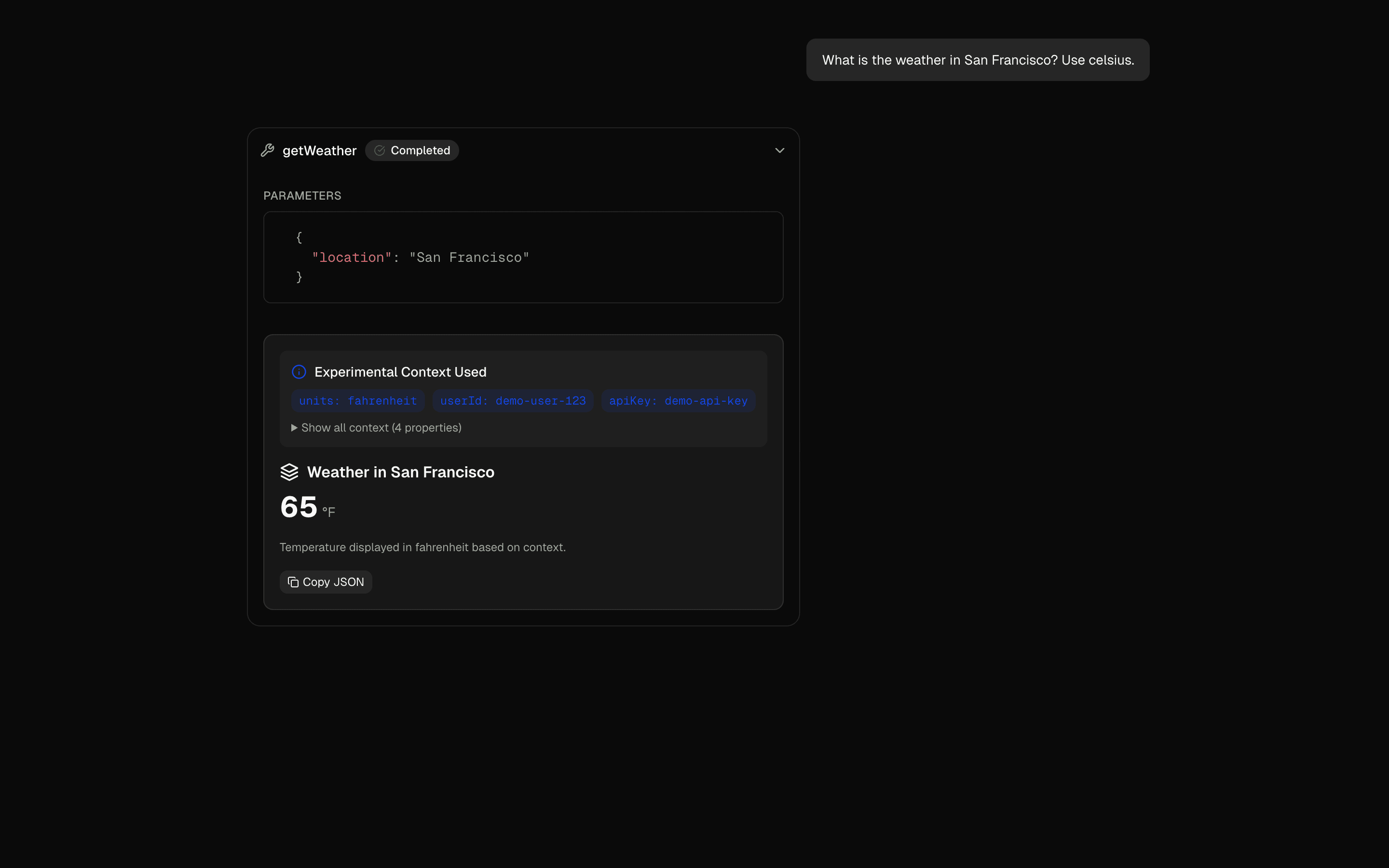 Tool API ContextUse this when you call generateText or streamText directly and want one tool definition to adapt to each user's preferences or session settings.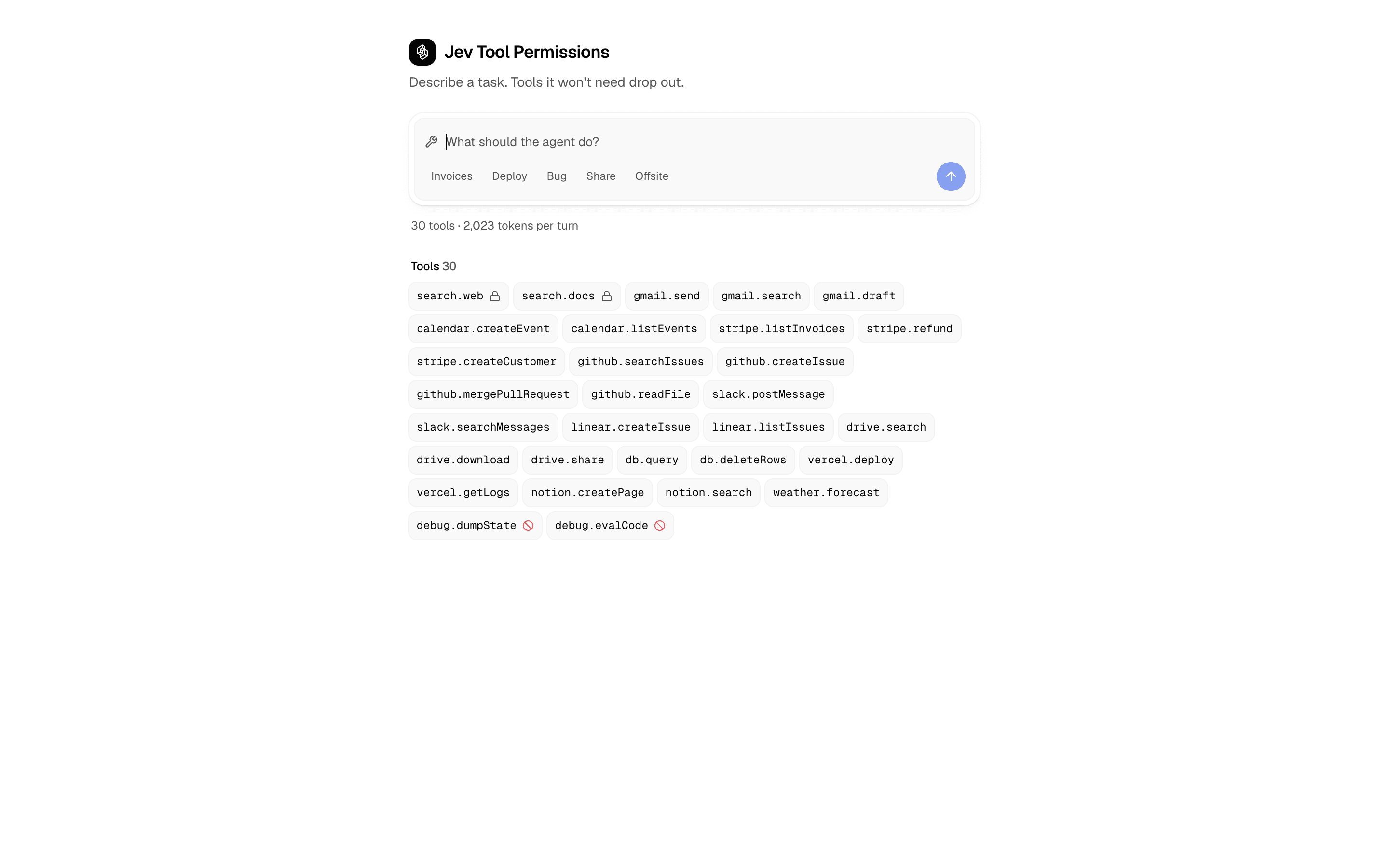
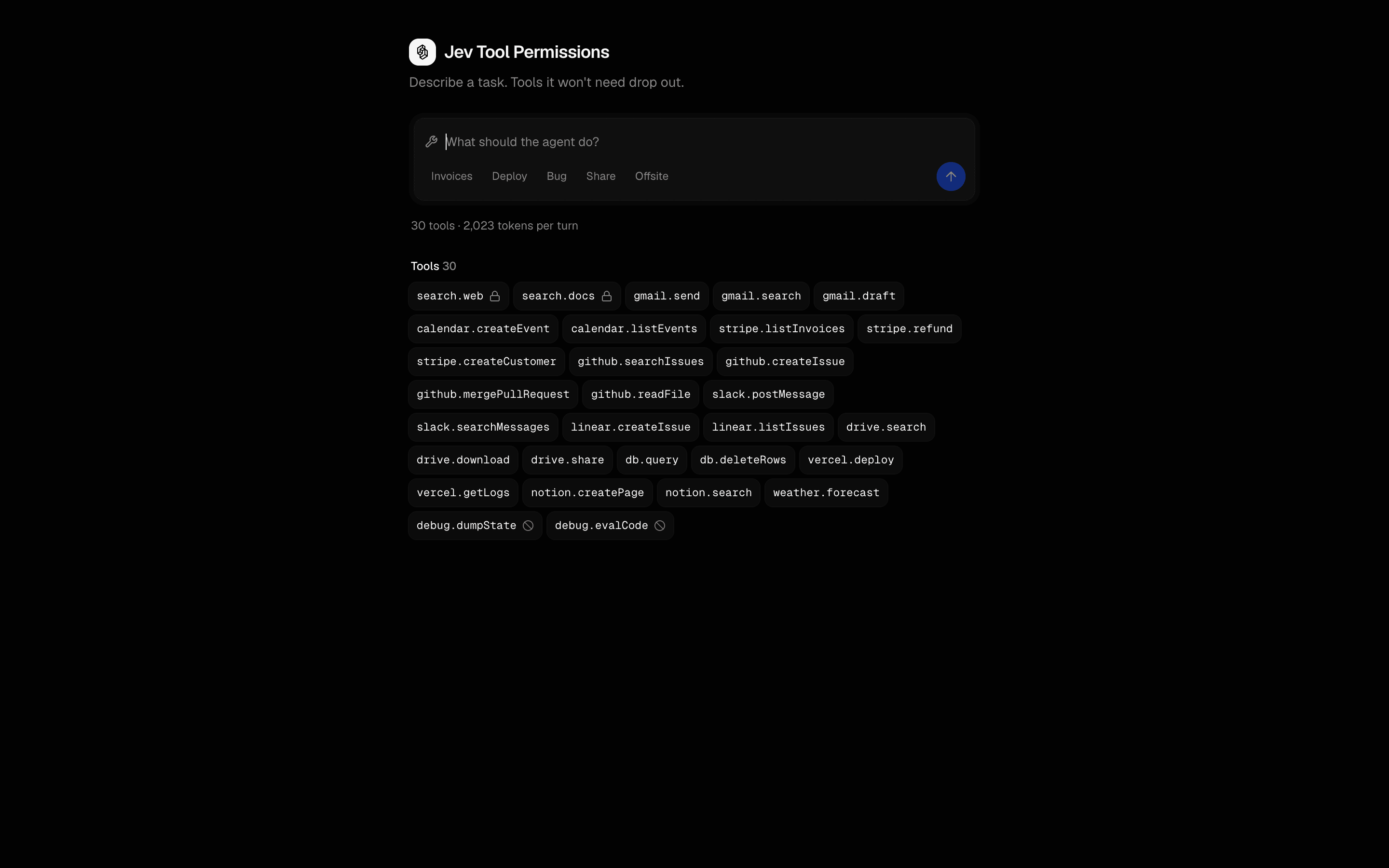 Jev Tool PermissionsUse this when an agent has dozens of MCP tools and you want deny rules plus one Jev relevance check per tool to trim the list before each step.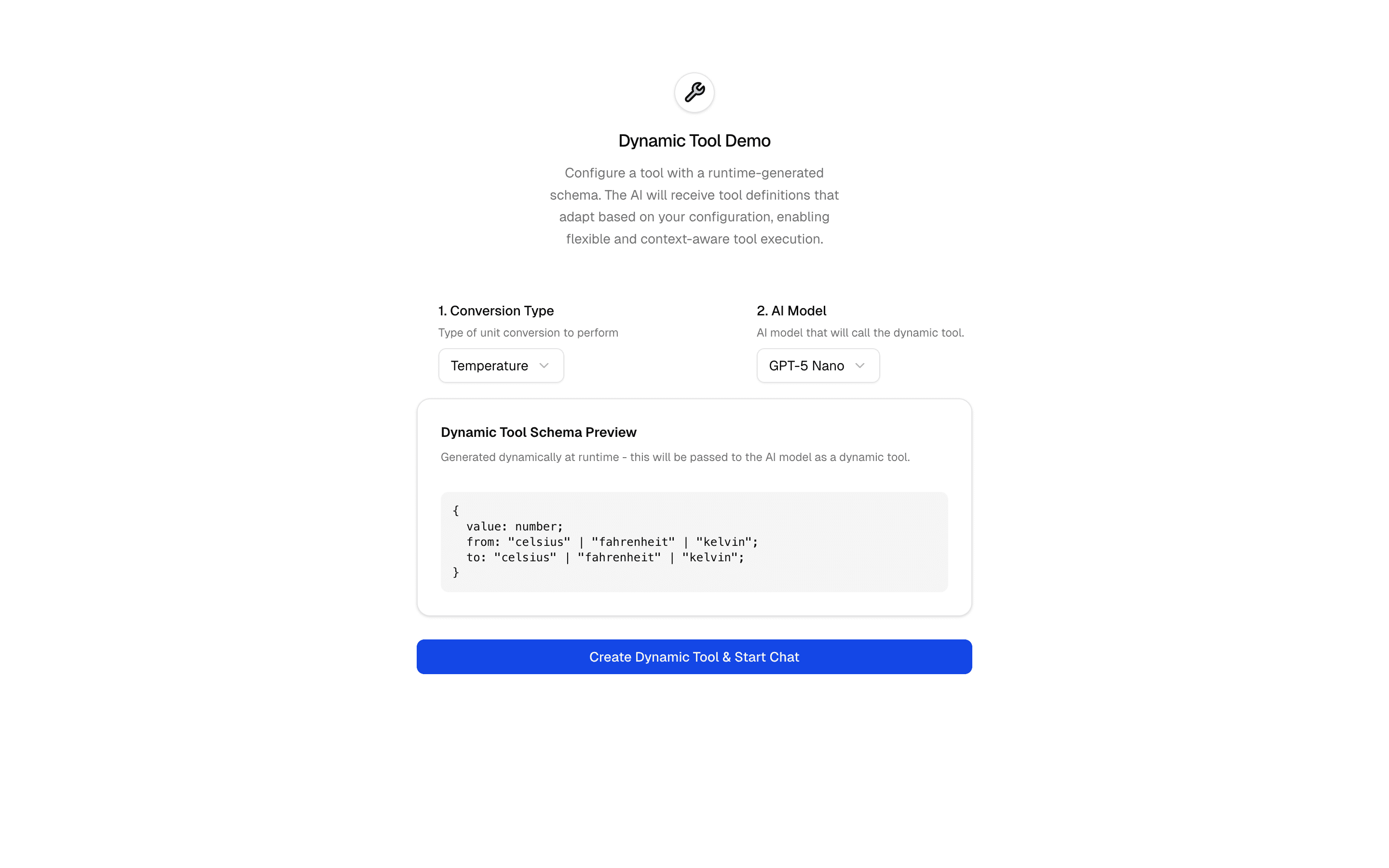
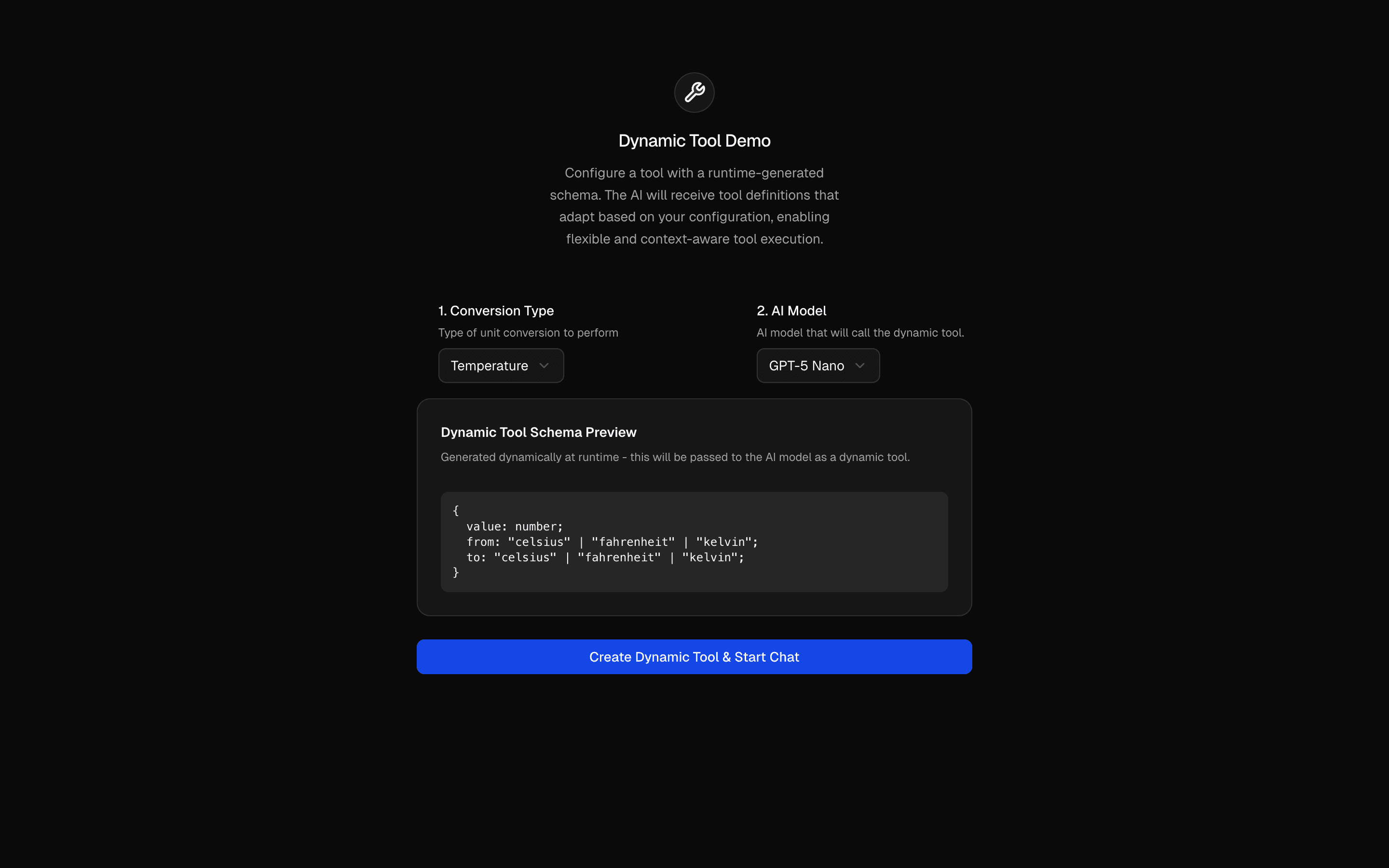 Dynamic ToolUse this when you need to build tools with dynamicTool whose Zod schemas change per request, like a converter whose inputs differ by conversion type.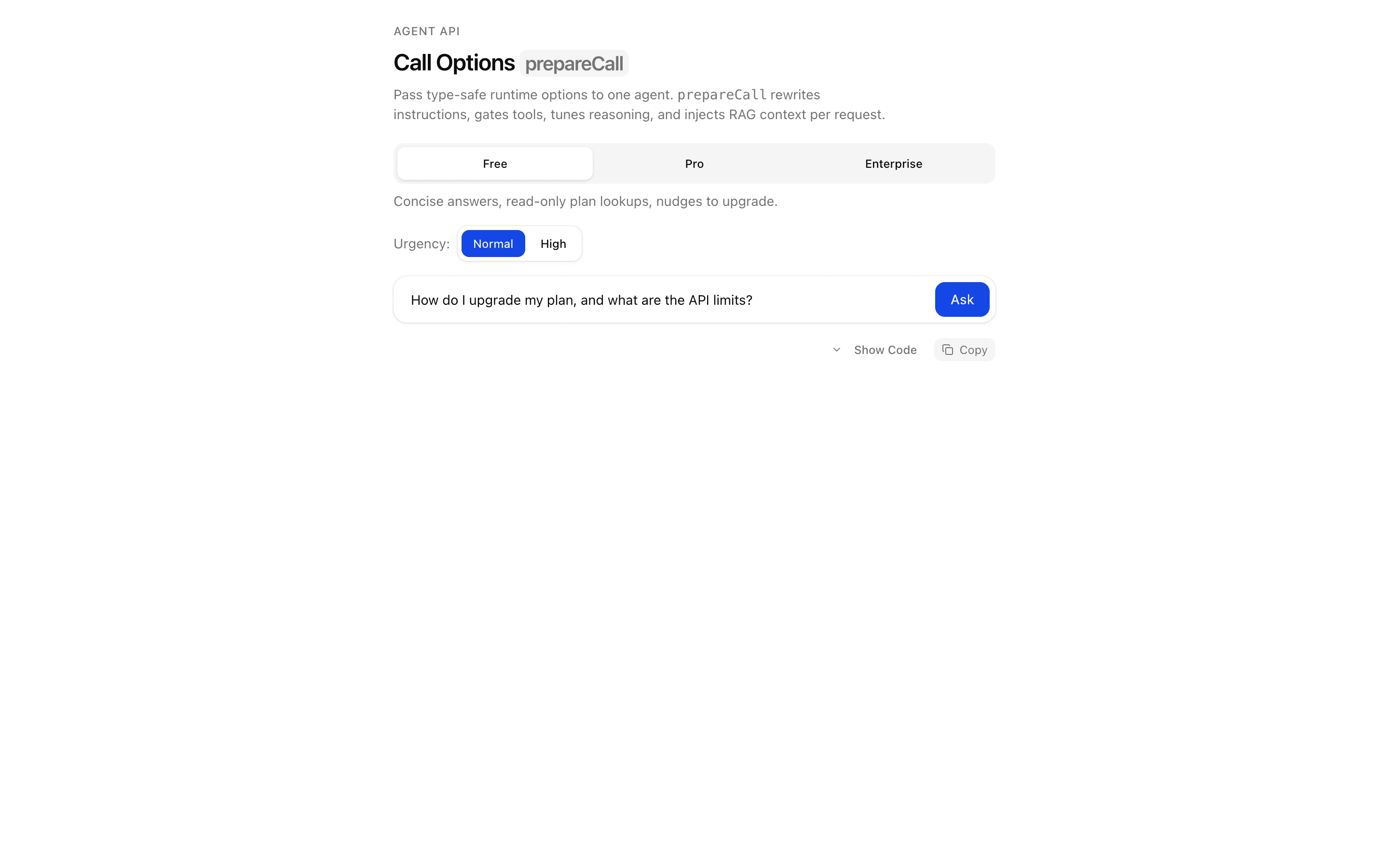
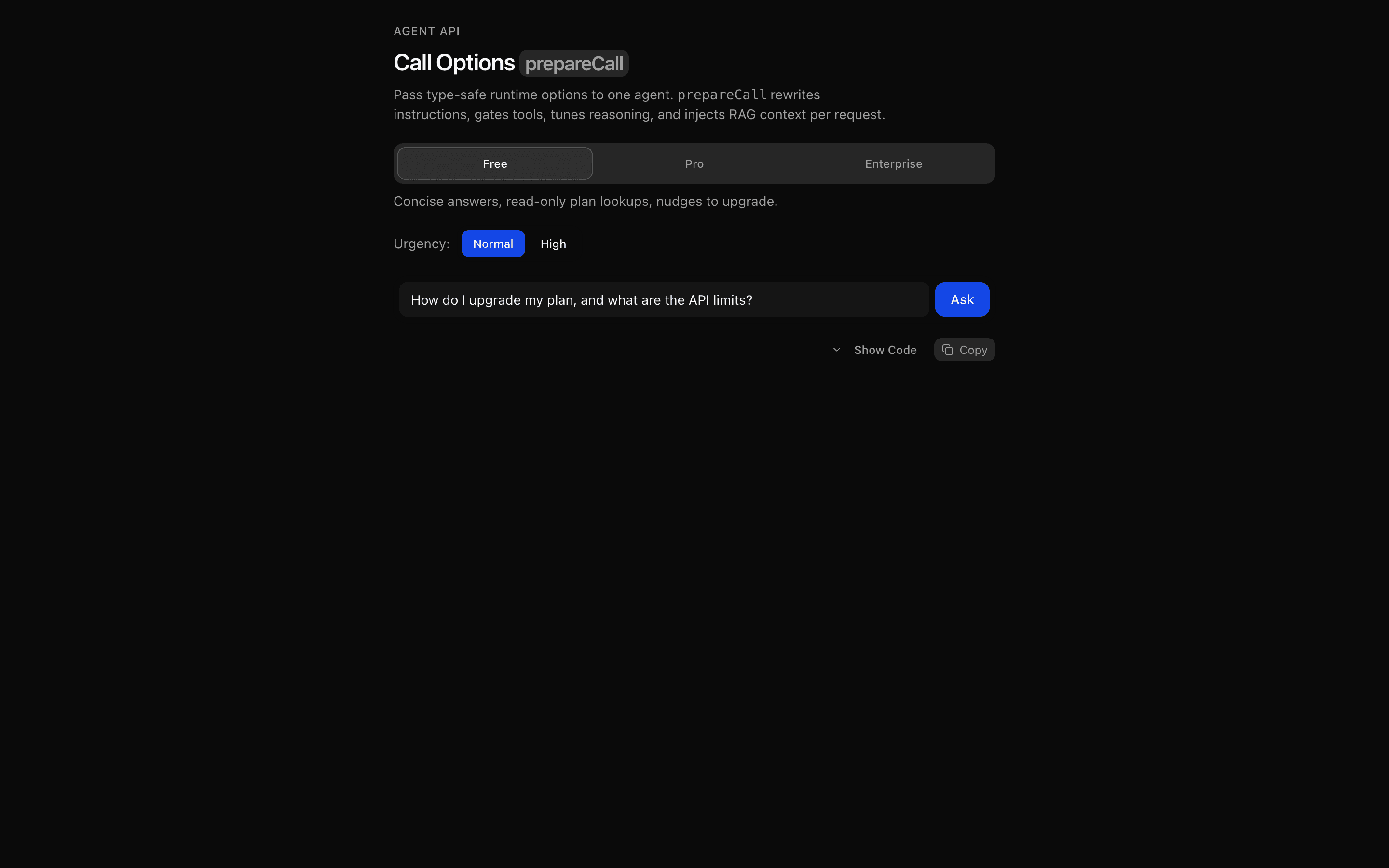 Call Options: prepareCallUse this when you need to inject per-user context, such as retrieved documents, into an agent's instructions at call time using typed call options.
Setup
Requirements, wiring steps, and what this pattern adds to your project.
Getting started
Pick how you want to pull this pattern in. Then wire env vars and routes the same way.
- 1
Download → Next.js app
Use Download → Next.js app in the preview toolbar. You get a zip scaffold (Pro downloads rewrite preview `/view/.../api/*` paths to `/api/*` automatically).
- 2
Extract the zip and install dependencies
Unzip the archive, then run `pnpm install` (or npm / yarn) in the project folder.
- 3
Fill .env.local
The download includes .env.local placeholders when needed. Add real values for: OPENAI_API_KEY.
- 4
Customize the agent and tool files
Adapt prompts, tools, and stop conditions in the generated project for your product.
- 5
Run the app and open the pattern route
Run `pnpm dev`, open the setup/checklist page if present, then navigate to the generated pattern route and verify responses.
Environment variables
OPENAI_API_KEYGet key
Capabilities
AI SDK APIs
ToolLoopAgentexperimental_contexttoolstepCountIsgatewayProviders
OpenAI
Files added
11 files
app/page.tsxapp/layout.tsxapp/api/context/route.tscomponents/context-demo.tsxcomponents/tool-call-trace.tsxlib/context-agent.tslib/request-context.tslib/demo-users.tstools/get-orders.tstools/get-profile.tsREADME.md
Dependencies
15 total
npm packages
6AISDKlucide-reactNext.jsReactZodstreamdown
 Registry components
alertbadgebuttoncardcollapsibleinputskeletontabstooltip
Critical files
3 files
tools/get-orders.tsCore pattern: tool whose inputSchema omits userId; execute reads identity and db from the second arg's experimental_context, casting to a RequestContext type.
context/route.tsResolves identity server-side and passes it to agent.generate({ prompt, experimental_context }). Returns tool calls and results for inspection.
lib/request-context.tsDefines the RequestContext type (userId, user, db) and a fake database. Replace with your real session + data layer.
Requirements
- Complexity
- Intermediate
- Setup time
- ~10 minutes
- Node
- 24+
- Memory
- 512MB